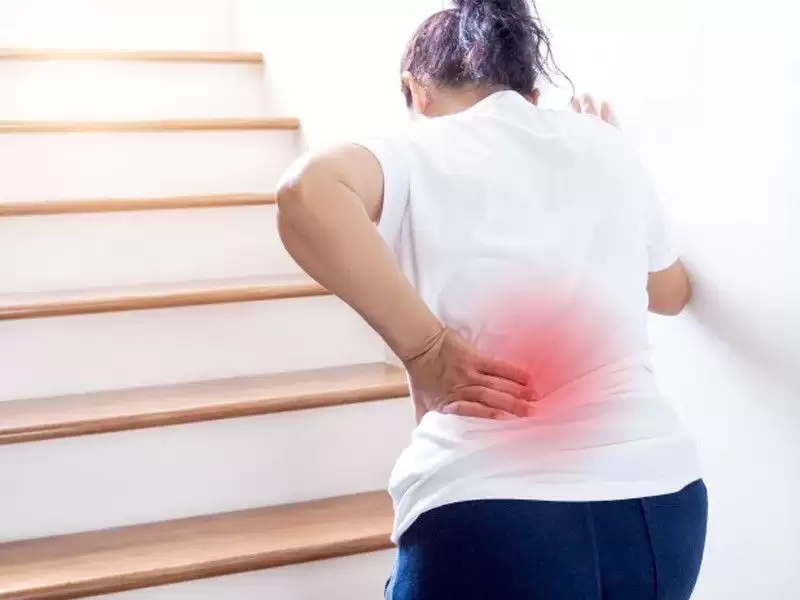
Spondylolisthesis is a spinal condition that occurs when one vertebra moves forward or, more rarely, backward relative to the vertebra below it. It may cause symptoms such as lower back pain, pain radiating to the legs, numbness, and a reduced walking distance in daily life. What is spondylolisthesis and how is spondylolisthesis diagnosed are important questions to answer accurately so that the treatment process can be planned in a timely manner.
- What Is Spondylolisthesis?
- What Causes Spondylolisthesis?
- What Are the Symptoms of Spondylolisthesis?
- How Is Spondylolisthesis Identified?
- Who Is More Likely to Develop Spondylolisthesis?
- What Is the Difference Between Spondylolisthesis and a Herniated Disc?
- What Do the Grades of Spondylolisthesis Mean?
- How Is Spondylolisthesis Diagnosed?
- How Is Spondylolisthesis Treatment Planned?
- When Is Spondylolisthesis Surgery Necessary?
- Recovery After Spondylolisthesis Treatment
- Frequently Asked Questions About Spondylolisthesis
What Is Spondylolisthesis?
Spondylolisthesis is a condition that occurs when one vertebra shifts relative to the vertebra below it, affecting spinal alignment. It is most commonly seen in the lower back because this region bears body weight, enables movement, and is continuously exposed to mechanical stress in daily life.
Vertebral displacement does not always cause severe pain. In some people, a mild slip is discovered incidentally, while in others, pain, weakness, and restricted movement become more pronounced when pressure develops on the nerve roots.
What Causes Spondylolisthesis?
What causes spondylolisthesis can be explained by various factors related to age, spinal structure, and daily habits. Congenital differences in spinal anatomy, stress fractures occurring during childhood or adolescence, trauma, and age-related wear of the joints and discs may contribute to the development of spondylolisthesis.
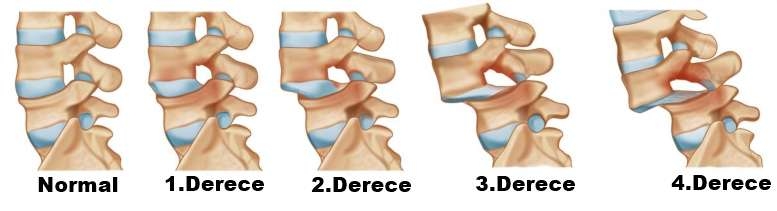
Spondylolisthesis has four grades
With advancing age, loss of fluid in the discs, loosening of the ligaments, and arthritis in the spinal joints may occur. These changes can disrupt the balance between the vertebrae, causing the slip to progress or existing symptoms to worsen.
What Are the Symptoms of Spondylolisthesis?
Symptoms of spondylolisthesis may vary from person to person and may be mild or pronounced depending on the degree of slippage. The most common complaints include lower back pain, pain radiating to the hip, numbness and tingling in the legs, difficulty walking, and increased discomfort after standing for long periods.
When nerve compression develops, the pain may not remain limited to the lower back and can radiate into the legs. Some patients may notice relief when bending forward, increased pain when leaning backward, or a shorter walking distance.
How Is Spondylolisthesis Identified?
How spondylolisthesis is identified involves evaluating the patient’s symptoms, physical examination findings, and imaging results together. Lower back pain alone is not sufficient to diagnose spondylolisthesis; the distribution of pain, nerve involvement, and spinal movements must also be assessed in detail.
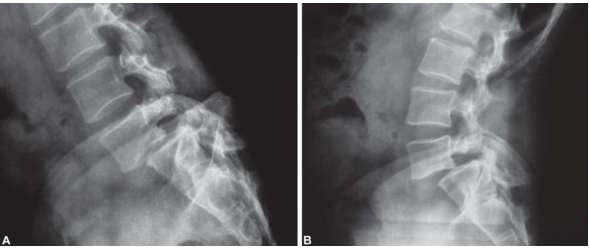
During the examination, leg strength, reflexes, sensation, gait, and lower back movements are checked. The alignment of the vertebrae, the spinal canal, and the degree of slippage are then evaluated using methods such as X-rays, dynamic X-rays, MRI, or computed tomography.
Who Is More Likely to Develop Spondylolisthesis?
Spondylolisthesis may be more common among young people who participate in sports that repeatedly load the spine, individuals who perform heavy physical work, those who stand for long periods, and older adults. Activities such as gymnastics, weightlifting, and movements that force the lower back into extension can place stress on the posterior structures of the spine.
Spondylolisthesis in older adults is more commonly associated with degenerative changes. Symptoms may become more pronounced in women, people with reduced bone density, individuals with weak lower back muscles, and those with long-term postural problems.
What Is the Difference Between Spondylolisthesis and a Herniated Disc?
Although spondylolisthesis and a herniated lumbar disc can cause pain in the same region, the underlying problem is different. In a herniated disc, disc tissue pressing on a nerve is the primary issue, whereas in spondylolisthesis, the alignment between the vertebrae is disrupted, which may narrow the spinal canal.
For this reason, the treatment plans are not the same. In a herniated disc, the effect of the disc on the nerve is evaluated, while in spondylolisthesis, whether spinal balance is impaired, whether the slip is progressing, and the degree of nerve compression are taken into account.
What Do the Grades of Spondylolisthesis Mean?
The grades of spondylolisthesis indicate how far one vertebra has shifted relative to the vertebra below it. In mild grades, the slippage is limited, and symptoms can often be controlled through monitoring, exercise, medication management, and lifestyle changes.
At more advanced grades, spinal balance may be disrupted and nerve compression may increase. In this case, the assessment of whether spondylolisthesis can be corrected is based on the degree of slippage, the patient’s age, neurological findings, and mobility in the spine.
How Is Spondylolisthesis Diagnosed?
A diagnosis of spondylolisthesis should not be made solely on the basis of imaging results. Although seeing slippage on MRI is an important finding, the patient’s pain, limitations in daily life, examination findings, and nerve involvement must be interpreted together when making treatment decisions.
Standing X-rays and forward-and-backward bending images are important for determining whether the slippage is mobile. MRI helps evaluate nerve compression, spinal canal narrowing, disc structure, and soft tissues.
How Is Spondylolisthesis Treatment Planned?
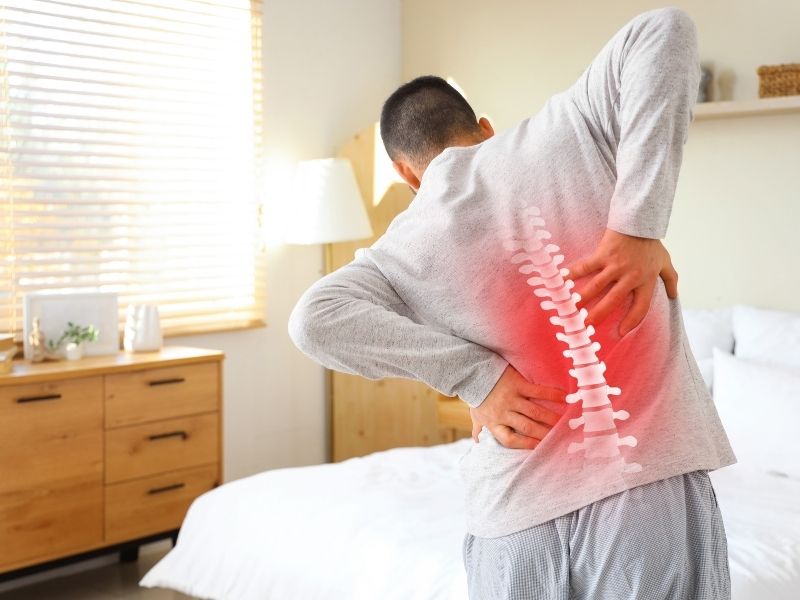
Spondylolisthesis treatment is planned individually according to the patient’s symptoms, the degree of slippage, and the presence of nerve compression. For mild to moderate symptoms, pain control, exercises that strengthen the lower back muscles, weight management, posture correction, and modifying daily activities may be among the first options.
How does spondylolisthesis improve? is a question that may reflect a search for a permanent solution, but a single method is not sufficient for every patient. In evaluating how spondylolisthesis is treated, the goals are to reduce pain, control nerve compression, preserve spinal balance, and allow the patient to move safely.
When Is Spondylolisthesis Surgery Necessary?
Spondylolisthesis surgery is generally considered when pain persists despite nonsurgical methods, leg weakness progresses, severe nerve compression is present, walking distance decreases significantly, or marked spinal instability develops. The decision for surgery should not be made hastily; examination and imaging findings should be evaluated together.
How spondylolisthesis surgery is performed may vary according to the patient’s spinal structure. The goals of surgery are to relieve nerve compression, stabilize the slipped vertebral level, and preserve spinal balance; therefore, screws and fusion techniques may be used in some patients.

Recovery After Spondylolisthesis Treatment
How spondylolisthesis treatment progresses depends on whether the plan is surgical or nonsurgical. During nonsurgical follow-up, regular exercise, proper movement habits, and medical check-ups are important, while after surgery, walking, wound care, movement restrictions, and physical strengthening are planned gradually.
How spondylolisthesis is corrected is not limited to correcting the visible slippage on imaging; the main goals are to reduce pain, preserve nerve function, and improve quality of daily life.
Which doctor should be consulted for spondylolisthesis? A neurosurgeon can evaluate the patient in detail with regard to the spine, nerve compression, and the need for surgery.
Some mild cases of untreated spondylolisthesis may remain stable for a long time, but symptoms can worsen in patients with progressive slippage and nerve compression. What happens if spondylolisthesis is not treated surgically? The answer should be assessed according to the patient’s current findings; while monitoring may be sufficient for some patients, delay may increase the risk of permanent nerve damage in others.
Frequently Asked Questions About Spondylolisthesis
How does spondylolisthesis affect daily life?
Symptoms of spondylolisthesis may appear in daily life as lower back pain, pain radiating to the legs, numbness, and difficulty standing for long periods. As the symptoms worsen, walking distance may decrease.
Can spondylolisthesis heal on its own?
Whether spondylolisthesis can improve is evaluated according to the degree of slippage and nerve compression. In mild cases, symptoms may be brought under control with spondylolisthesis treatment.
Why does pain radiate to the leg in spondylolisthesis?
During the process that causes spondylolisthesis, nerve roots may come under pressure when the alignment of the vertebrae is disrupted. This pressure may cause pain that radiates from the lower back to the hip and leg.
Is recovery without surgery possible in spondylolisthesis?
The answer to how spondylolisthesis improves is not the same for every patient. Exercise, weight control, medication, and lifestyle adjustments may be effective in some patients.
What problems may occur if spondylolisthesis progresses?
What happens if spondylolisthesis is not treated surgically varies according to nerve compression and the progression of the slippage. In advanced cases, leg weakness, numbness, and walking limitations may increase.
Which department should be consulted if spondylolisthesis is suspected?
Regarding which doctor to consult for spondylolisthesis, a neurosurgery specialist can evaluate the spine and nerve compression. If necessary, the diagnosis can be clarified with imaging methods.
What is the purpose of spondylolisthesis surgery?
The plan for how spondylolisthesis surgery is performed is determined according to the patient’s spinal structure. Spondylolisthesis surgery aims to reduce nerve compression and preserve spinal balance.