Ulnar Nerve Surgery is performed to treat the health problem known as ulnar nerve compression, that is, carpal tunnel syndrome . You can find information about ulnar nerve surgery in this article.
What Is the Ulnar Nerve?
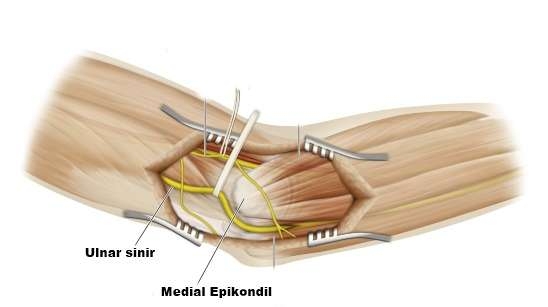
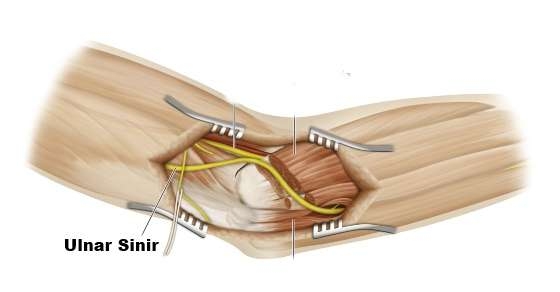
The ulnar nerve exits from the spine, activates some of the muscles in the hands, and enables sensation in the little finger and ring finger. As the nerve descends along the arm, it passes toward the front at a bony protruding region in the elbow called the medial epicondyle (cubital tunnel). This point is very close to the surface. With a sudden touch to this area, temporary stimulation of the ulnar nerve can often occur. It may cause pain or lead to tingling in the hand. During daily life, this nerve may be stretched and compressed behind the bony prominence in the elbow. When the nerve is under excessive pressure or is stretched regularly, longer-lasting ulnar nerve symptoms may occur.
What Causes Ulnar Nerve Compression?
The exact cause of cubital tunnel syndrome is not known. The tunnel is narrow in the elbow passage area and there is less soft tissue protection. Common causes of ulnar nerve compression include keeping the elbow bent for a long time, keeping the hand in a compressed position while sleeping, sleeping on the elbow, calcification, rheumatic diseases, trauma, and fracture healing processes. In cases where diagnosis and treatment are delayed, serious decreases in the patient’s quality of life may occur. If carpal tunnel syndrome is left untreated for a long time and progresses, permanent sensory loss in the fingers and loss of strength in the hand may occur.
What Are the Symptoms of Ulnar Nerve Compression?
A feeling of tightness on the inner side of the elbow is a symptom of ulnar nerve compression. Other symptoms can be listed as follows;
- Numbness in the little finger and ring finger of the hand, especially felt at night,
- Numbness after the elbow remains bent for a long time, such as while driving or talking on the phone
- Difficulty while playing a musical instrument or doing work involving the fingers of the hand
- A feeling of weakness during gripping or picking actions
- Discomfort such as pain felt along the inner side of the entire arm
- Pain around the elbow and hand
- Tingling and loss of sensation in the little finger and ring finger,
- Weakness in some muscles of the hand
- Inability to open and close the little and ring fingers
- Reduced holding and gripping strength,
- Difficulty with coordination

If any of these symptoms are present, consult your doctor. Early diagnosis may help overcome this health problem with easier treatment options.
What Are the Risk Factors for Ulnar Nerve Compression?
The risk factors for ulnar nerve compression, also known as carpal tunnel syndrome, can be listed as follows;
- Previous elbow fractures or dislocation
- Calcifications and bone spurs
- Swelling in the elbow joint
- Cysts around the elbow
- A burning sensation in the hand, arm, and fingers
- Increasing numbness and tingling sensation in the affected arm while typing on a keyboard or writing with a pen
- A stinging sensation in the hand, arm, or fingers
- Tingling in the hands or other unusual sensations
- A feeling of weakness in the hand, arm, or fingers
- Prolonged and repetitive bending of the elbow
Ulnar Nerve Treatment
If the complaints are at an advanced stage or do not improve with the above or non-surgical methods, surgical treatment may be performed to eliminate the pressure on the nerve. The thickened connective tissue covering the groove through which the ulnar nerve passes is opened and the nerve is relieved. The surgery is generally performed under general anesthesia or by numbing the arm from the armpit, that is, with local anesthesia. The patient stays in the hospital for one night and is observed. After the surgery, there is usually a dressing that remains on the elbow for about 2 weeks, but patients can use their hands immediately. The stitches are removed after approximately 12 days, and then heavy lifting, straining, and heavy work are not recommended for a few more weeks. After surgery, physical therapy may be necessary for some people. The numbness and tingling sensation are expected to improve in the period immediately after the operation.

Frequently Asked Questions About Ulnar Nerve Surgery
Where is the ulnar nerve located?
The ulnar nerve is one of the main nerves in our arm. It passes under the collarbone and progresses from the upper arm toward the inner side. It passes through the inside of the elbow.
What movement does the ulnar nerve provide?
The ulnar nerve provides the sense of touch in the hand and enables bending movements of the wrist and fingers. It provides sensation to the ring finger and little finger.
Which department treats ulnar nerve compression?
The department that deals with the ulnar nerve is Neurosurgery.
Why does the ulnar nerve get compressed?
Ulnar nerve compression may occur as a result of frequent bending of the elbow, excessive load on the elbow, or injury to the elbow.
What happens if ulnar nerve compression is not treated?
If ulnar nerve compression is not treated, it may cause irreversible nerve damage.