
What Is a Brain Tumor?
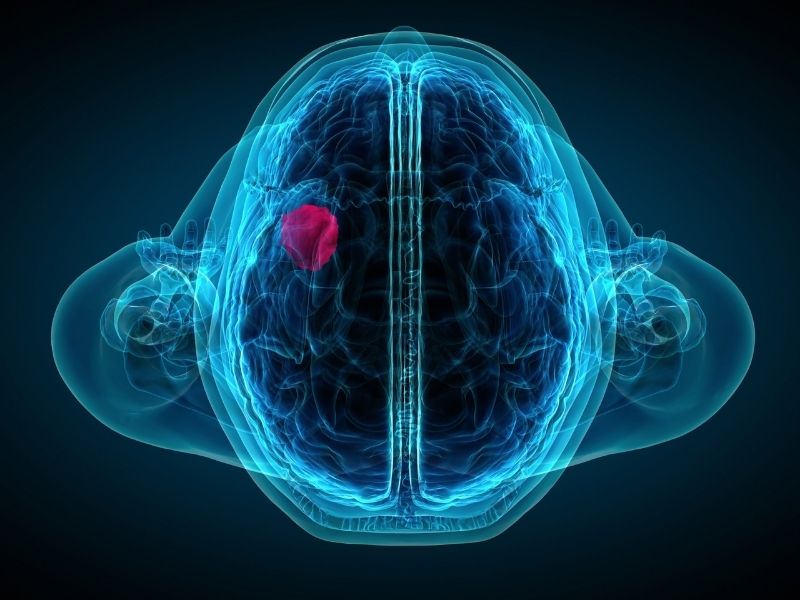
A tumor is a tissue that forms in a place where it should not exist in the body. If the tumor develops from the brain’s own cells; brain tumor is considered in two groups as benign and malignant. There are no cancerous cells in benign brain tumors. These types of tumors are generally removed by surgery and do not recur.
The edges and borders of benign tumors can be seen clearly. They do not tend to spread to the healthy tissues around them and do not spread to other parts of the body. However, it cannot be concluded from this that all benign tumors are completely harmless. Benign tumors can sometimes cause serious health problems by putting pressure on sensitive parts of the brain. Compared to benign tumors in other parts of the body, a benign tumor occurring in the brain may cause a life-threatening condition.
Although rare, a benign tumor may turn into a malignant tumor over time.
Malignant or cancerous brain tumors contain cancer cells. Malignant brain tumors are more dangerous and pose a life-threatening risk for the patient. These types of tumors tend to grow rapidly and spread to the healthy tissues around them. Cancer cells may separate from the malignant brain tumor and metastasize to other parts of the brain, the spinal cord, or other parts of the body.
Malignant brain tumors do not spread to healthy tissues in every patient. The tumor may be confined and trapped within a tissue layer, the skull bone, or another structure in the head. These types of tumors are called encapsulated tumors.
Brain tumors can occur at any age. Malignant brain tumors are more common in people over the age of 60 and in children. Outside these age ranges, benign brain tumors are more common. Brain tumors are seen more frequently in men than in women.
What Are the Symptoms of a Brain Tumor?
The symptoms of a brain tumor vary depending on the size, type, and location of the tumor.
When the tumor puts pressure on nerve endings, causes damage to the brain, or grows and causes fluid accumulation inside the skull, a number of symptoms begin to appear in the person.
The most common symptoms of a brain tumor are as follows;
- Headache that worsens in the morning
- Visual disturbances
- Speech disorders
- Hearing loss
- Nausea and / or vomiting
- Experiencing balance problems while standing or walking
- Memory problems
- Loss of consciousness
- Muscle twitching, contractions, spasms, or seizures
- Numbness and tingling in the arms and legs
Stages of Brain Tumor
The stages of a brain tumor determine the person’s treatment and life process. As with all other malignant tumors, early diagnosis is important in brain tumors as well.
Today, in the treatment of brain tumors, based on the pathological diagnosis of the tumor; methods such as surgery, radiotherapy (radiation treatment), radiosurgery, and chemotherapy (drug treatment) are applied separately or in combination.
Stage One
The first stage represents the very beginning of the disease. The headache and other symptoms experienced by the person appear in the first stage. A patient at this stage undergoes surgery and receives chemotherapy and radiotherapy treatment after the surgery.
Brain tumors are quite diverse, but if a stage 1 brain tumor is intervened in, the patient’s life expectancy is significantly prolonged.
Stage Two
In brain tumors, the second stage is also a stage in which treatment by surgery is still possible. In a brain tumor diagnosed at the second stage, it is not yet too late and the patient can be treated. The symptoms seen in the second stage are headaches, vomiting, and weakness. The life expectancy of patients diagnosed and treated for a brain tumor at the second stage is also significantly prolonged, just like in patients at the first stage.
Stage Three
The size and location of the brain tumor determine its stage. The third stage means that the disease has advanced.
Forgetfulness, loss of consciousness, headaches, and mild short-term paralysis experienced in some parts of the body are among the main symptoms of a third-stage brain tumor. At this stage, the patient may sometimes lose control of the arm and foot. In addition, speech disorders are also seen in patients at this stage. Life expectancy in most patients depends on the type of tumor.
Stage Four
Although the fourth stage is the most dangerous stage, it is also accordingly a difficult process. The type of tumor also plays an important role at this stage. The patient experiences headache, vomiting, and visual disturbances. In addition; because the tumor progresses, symptoms such as disorders of consciousness, forgetfulness, loss of balance, difficulty speaking, decreased hearing, and difficulty understanding are also seen at this stage.
In these stage brain tumors, treatment methods such as chemotherapy and radiotherapy are also applied.