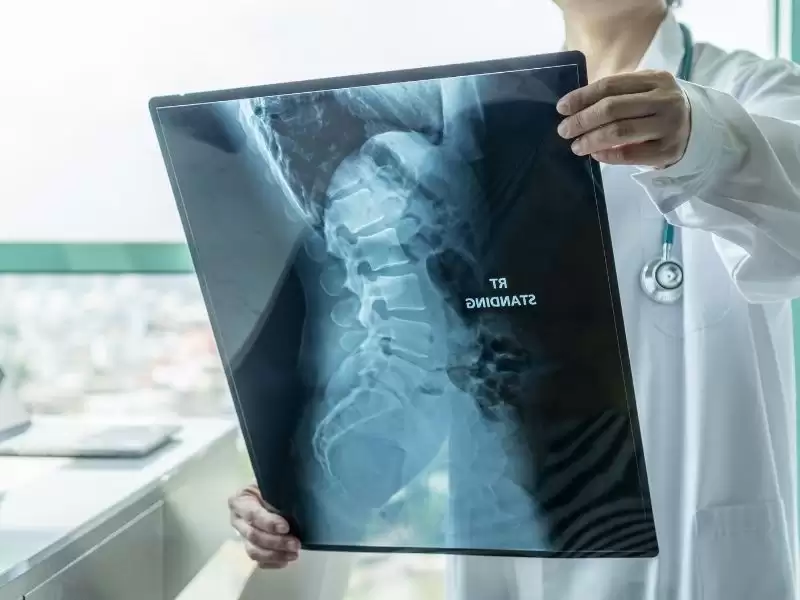
Spinal Cord Tumor is an important health problem that develops within the spinal canal and can create pressure on nerve tissue. It may progress insidiously in the early stage and can often be confused with ordinary low back or back pain. However, neurological findings may emerge in the later course and quality of life may be significantly affected. Accurate diagnosis and timely planned treatment play a decisive role in reducing the risk of permanent damage.
- What Is A Spinal Cord Tumor?
- Why Does A Spinal Cord Tumor Occur?
- What Are The Types Of Spinal Cord Tumors?
- What Is The Difference Between Benign And Malignant Spinal Cord Tumors?
- What Are The Symptoms Of Spinal Cord Tumor?
- What Is Spinal Cord Tumor Pain Like?
- In Which Area Does A Spinal Cord Tumor Cause Pain?
- Does A Spinal Cord Tumor Cause Weakness In The Legs?
- How Is Spinal Cord Tumor Diagnosed?
- The Importance Of MRI In Spinal Cord Tumor Imaging
- How Is Spinal Cord Tumor Treatment Planned?
- How Is Spinal Cord Tumor Surgery Performed?
- Is Radiotherapy Necessary In Spinal Cord Tumor?
- Recovery Process After Spinal Cord Tumor
- Does Spinal Cord Tumor Recur?
- At What Age Is Spinal Cord Tumor Seen?
What Is A Spinal Cord Tumor?
Spinal cord tumor is an abnormal proliferation of cells arising from the spinal cord tissue itself or from the structures surrounding the spinal cord. The spinal cord, which provides nerve transmission between the brain and the other parts of the body, is protected within the spinal canal and plays a critical role in regulating vital functions. For this reason, a mass developing within or around the spinal cord may lead to serious neurological findings depending on the level at which it is located. A Spinal Cord Tumor may develop directly from the spinal cord tissue, or it may arise from nerve sheaths, meningeal structures, or surrounding bone tissue.
Although spinal cord tumor is a rare pathology, it should be carefully evaluated in terms of early diagnosis and proper treatment planning. The growth rate, location, and histopathological features of the lesion determine the patient’s clinical course. A detailed evaluation by a brain and nerve surgery specialist forms the basis of the treatment process.
Why Does A Spinal Cord Tumor Occur?
The mechanism of tumor formation in the spinal cord is not fully clear. Genetic changes that lead to uncontrolled cell proliferation are accepted as the main cause. Some hereditary syndromes, especially genetic diseases such as neurofibromatosis, may increase the risk of tumor development in the spinal cord region. In addition, a Spinal Cord Tumor may also occur as a result of cancer cells in another part of the body spreading to the spine.
The effect of environmental factors is known only to a limited extent. A history of exposure to radiation is considered a risk factor in some cases. However, in many cases of Spinal Cord Tumor, no clear cause can be identified. This process, which begins at the cellular level, leads to clinical symptoms over time by creating pressure on the spinal cord.

What Are The Types Of Spinal Cord Tumors?
Spinal Cord Tumor is classified according to its anatomical location. Intramedullary tumors develop directly from within the spinal cord tissue. Ependymoma and astrocytoma are included in this group. Extramedullary tumors, on the other hand, are located outside the spinal cord but within the spinal canal. Meningioma and schwannoma are examples of this group. In addition, lesions originating from the spinal bones or metastasizing from other organs are also evaluated under the heading of Spinal Cord Tumor.
The type of tumor directly affects the treatment approach and prognosis. Some lesions grow slowly, while others may show an aggressive course. Therefore, detailed pathological examination is important after a diagnosis of Spinal Cord Tumor is made.
What Is The Difference Between Benign And Malignant Spinal Cord Tumors?
Benign Spinal Cord Tumor usually shows slow growth and does not tend to spread to surrounding tissues. Its cellular structure is more regular and its borders are often clearer. However, because the spinal canal is a limited space, even a small mass may create pressure on nerve tissue and cause serious neurological findings. Therefore, being benign does not mean it is clinically insignificant.
A malignant Spinal Cord Tumor, on the other hand, may grow more rapidly, spread to surrounding tissues, and in some cases metastasize to other parts of the body. Its cellular structure is more irregular and the tendency for uncontrolled proliferation is more pronounced. In such lesions, surgery alone may not be sufficient; radiotherapy or additional oncological treatments may be planned. These main differences between benign and malignant Spinal Cord Tumors play a decisive role in determining the treatment approach and establishing the long-term follow-up strategy.
What Are The Symptoms Of Spinal Cord Tumor?
Symptoms of Spinal Cord Tumor vary depending on the degree of pressure exerted by the lesion on the spinal cord, its level of location, and its growth rate. The most common complaint is gradually increasing and persistent back or low back pain. This pain usually does not improve completely with rest and may become more noticeable especially at night. Unlike mechanically caused spinal pain, it may tend to increase in severity over time.
As Spinal Cord Tumor progresses, nerve transmission is affected and numbness, tingling, and reduced sensation may occur in the arms or legs. Some patients describe a sensation similar to an electric shock. If the pressure increases, a decrease in muscle strength, imbalance while walking, and difficulty climbing stairs may develop. In more advanced stages, impairment of urinary and bowel control may be seen. Because the symptoms progress slowly, the condition may initially be mild; therefore, detailed neurological evaluation is important in long-lasting spinal pain of unexplained cause.
What Is Spinal Cord Tumor Pain Like?
Spinal Cord Tumor pain is usually deep-seated, pressure-like, and persistent in character. It may be mild at the beginning, but gradually becomes more pronounced over time. It may increase with movement, but does not disappear completely with rest. Pain that increases especially at night and wakes the person from sleep is a finding that should be carefully evaluated.
When a Spinal Cord Tumor creates pressure on the nerve roots, the pain may not remain limited to the spinal region. A condition may develop in which the pain radiates from the neck to the arm or from the lower back to the leg, accompanied by a burning or electric shock sensation. This radiating pain suggests nerve compression. Unlike mechanical muscle and disc problems, its progressive nature and its course together with neurological findings make Spinal Cord Tumor pain clinically distinctive.
Click here to get detailed information about spinal cord tumors.

In Which Area Does A Spinal Cord Tumor Cause Pain?
A Spinal Cord Tumor may cause pain in different regions depending on the spinal level where it is located. In lesions located in the cervical vertebrae, pain is usually felt in the nape and neck line and may spread over time to the shoulders and arms. Numbness or loss of strength radiating down the arm may accompany this condition. A Spinal Cord Tumor developing in the back region may cause deep and persistent pain between the shoulder blades.
A Spinal Cord Tumor located at the lumbar level usually presents with low back pain and symptoms radiating toward the legs may be seen. Pain descending to one or both legs especially suggests nerve root compression. Although the area where the pain is felt is a guide in estimating the anatomical location of the lesion, definitive evaluation is made by magnetic resonance imaging.
Does A Spinal Cord Tumor Cause Weakness In The Legs?
Spinal Cord Tumor may affect nerve transmission when it creates pressure on the spinal cord tissue, and as a result, loss of strength may occur in the legs. A condition that is initially felt as mild weakness or easy fatigue may become more apparent over time with shortened walking distance and balance problems. Difficulty climbing stairs or the foot catching on the ground are among the notable findings.
As the degree of pressure increases, the decrease in muscle strength becomes more pronounced. An increase or decrease in reflexes may be seen, and some patients may develop muscle stiffness. When Spinal Cord Tumor progresses, a picture of strength loss affecting both legs may occur, and this may seriously restrict daily life activities. Early diagnosis and appropriate treatment planning are critically important in reducing the risk of permanent neurological damage.
How Is Spinal Cord Tumor Diagnosed?
Diagnosis of Spinal Cord Tumor begins with a detailed neurological evaluation. The patient’s complaints are listened to carefully, and the duration and spread of the pain as well as accompanying neurological findings are questioned. During the examination, muscle strength, reflexes, sensory functions, and walking pattern are examined in detail. This evaluation provides important clues as to whether there is pressure at the spinal cord level.
If the clinical findings raise suspicion for Spinal Cord Tumor, imaging methods are used. Magnetic resonance imaging is the main diagnostic tool that provides detailed evaluation of the spinal cord and surrounding tissues. In cases considered necessary, bone structures may be examined with computed tomography. Definitive diagnosis is made by pathological examination of the tissue removed during surgery, and the type of tumor is clarified as a result of this evaluation.
The Importance Of MRI In Spinal Cord Tumor Imaging
In the evaluation of Spinal Cord Tumor, MRI is of critical importance because it clearly shows soft tissue detail. The size, location, and relationship of the tumor with the spinal cord are examined in detail. Contrast-enhanced MRI helps determine the boundaries and spread of the lesion.
Before surgical planning, Spinal Cord Tumor mapping is performed with MRI. In this way, the surgical strategy is determined and risks are minimized.
How Is Spinal Cord Tumor Treatment Planned?
Treatment of Spinal Cord Tumor is planned by taking into account the tumor’s level of location, size, pathological type, and the patient’s neurological condition. The main aim of the treatment process is to eliminate the pressure on the spinal cord, stop neurological loss, and provide the safest removal possible at the highest achievable rate. The patient’s age, accompanying diseases, and current functional status also play a determining role in the decision-making process.
In most cases of Spinal Cord Tumor, surgical treatment is at the forefront. Using microsurgical techniques, the goal is to remove the tumor without damaging the spinal cord tissue. However, complete removal may not be possible in every case. In this situation, radiotherapy or additional oncological approaches may be included in the treatment plan. In the management of Spinal Cord Tumor, joint evaluation by disciplines such as brain and nerve surgery, radiation oncology, and neurology is important for treatment effectiveness and patient safety.
How Is Spinal Cord Tumor Surgery Performed?
Spinal Cord Tumor surgery is a delicate surgical procedure performed with advanced microsurgical techniques and specialized equipment. The operation is generally performed under general anesthesia. According to the tumor’s level of location, a controlled surgical approach is applied from the posterior part of the spine and the spinal canal is reached. The aim is to access the tumor safely while protecting the spinal cord tissue and nerve roots.
During surgery, the Spinal Cord Tumor is carefully separated from the surrounding tissues using an operating microscope. The goal is to remove the mass creating pressure on the spinal cord as extensively as possible. However, preservation of the nerve tissue is always the priority. For this reason, nerve transmission is monitored in real time throughout the operation with neuromonitorization methods. These techniques help the surgeon perform safe resection while preserving spinal cord functions and contribute to reducing postoperative neurological risks.
Is Radiotherapy Necessary In Spinal Cord Tumor?
In the treatment of Spinal Cord Tumor, radiotherapy is not a method routinely applied in every patient; however, in certain situations it may become an important part of the treatment plan. Radiotherapy comes to the agenda especially in cases of Spinal Cord Tumor that have malignant features, show a tendency for rapid growth, or cannot be completely removed during surgery. The aim is to control any tumor cells that may remain and reduce the risk of regrowth.
The decision for radiotherapy is made according to the result of pathological examination, the location of the tumor, and the patient’s general condition. In some benign and completely removed Spinal Cord Tumor cases, additional treatment may not be needed. Therefore, the treatment process is planned individually as a result of joint evaluation by brain and nerve surgery and radiation oncology specialists.

Recovery Process After Spinal Cord Tumor
After Spinal Cord Tumor surgery, the recovery process varies depending on many factors such as the tumor’s location, the degree of removal, and the preoperative neurological condition. In some patients, neurological findings may regress in the early period, while in some cases recovery may take longer. Especially in nerve tissue exposed to long-term pressure before surgery, healing may progress more slowly.
Early mobilization after surgery and planned physical therapy applications are important in terms of regaining muscle strength and supporting balance functions. In the period after Spinal Cord Tumor, both the recovery process and possible recurrence are monitored with regular clinical controls and imaging studies. Long-term follow-up plays a critical role in preserving the patient’s neurological functions and maintaining quality of life.
Does Spinal Cord Tumor Recur?
Spinal Cord Tumor may recur in some patients after treatment. The risk of recurrence depends on the tumor’s pathological features, whether it is benign or malignant, and to what extent it could be removed during surgery. In cases of Spinal Cord Tumor that could not be completely removed or that have an aggressive cellular structure, the likelihood of recurrence is higher.
For this reason, the process after treatment in patients diagnosed with Spinal Cord Tumor is not limited only to surgery. The area is closely monitored with regular neurological examination and follow-up magnetic resonance imaging. If recurrence is detected early, repeat surgery or additional treatment options may be planned according to the patient’s clinical picture. Long-term follow-up is an important step in keeping the disease under control.
At What Age Is Spinal Cord Tumor Seen?
At What Age Is Spinal Cord Tumor Seen?
Spinal Cord Tumor can be seen at any age; however, depending on the type of tumor, it may occur at different frequencies during childhood, young adulthood, or older age.
Is Spinal Cord Tumor Genetic?
Spinal Cord Tumor is usually not genetic; however, an increased risk may be seen in individuals with certain hereditary syndromes.
Does Spinal Cord Tumor Cause Paralysis?
If left untreated, Spinal Cord Tumor may create serious pressure on the spinal cord and lead to permanent loss of strength in advanced stages.
How Fast Does Spinal Cord Tumor Grow?
The growth rate of Spinal Cord Tumor varies depending on whether the tumor is benign or malignant; some progress slowly, while others may follow a faster course.
Can Spinal Cord Tumor Be Treated Without Surgery?
In some selected cases, Spinal Cord Tumor can be controlled with radiotherapy; however, in most cases surgery is the main treatment option.
How Often Are Spinal Cord Tumor Check-Ups Performed?
The follow-up frequency after Spinal Cord Tumor is determined according to the type of tumor; regular neurological examination and MRI imaging are generally recommended at intervals.