
What Are the Features of Shunt Surgery in Hydrocephalus?
The disease caused by excessive accumulation of cerebrospinal fluid in and around the brain is called hydrocephalus.
Under normal conditions, cerebrospinal fluid is continuously produced within the skull and absorbed by the arachnoid membrane. However, due to obstruction or the inability of the arachnoid membrane tissue to perform its function, this fluid begins to increase inside. While this increase appears as distortion of the skull shape and enlargement of the head in infant patients, different complications may occur in adult patients. Since hydrocephalus cannot be treated with medication, drainage of the fluid is achieved through two different surgical interventions. One of these is endoscopic surgery and the other is the shunt surgery technique. Detailed information about the shunt surgery technique in hydrocephalus is as follows.
Why and How Does Hydrocephalus Occur?
In hydrocephalus cases, the circulation of fluid in the brain changes abnormally for different reasons and fluid accumulation begins to occur. Under normal conditions, this fluid is continuously produced and absorbed by the brain membrane, protecting the brain from impacts, maintaining circulation inside, and balancing brain pressure.
Let us examine the answers to the question of why and how hydrocephalus occurs. Hydrocephalus occurs in two different ways: due to obstruction or due to the inability of the arachnoid structure to fully perform its function. A brain tumor appearing in that area may cause an obstruction. Hydrocephalus caused by obstruction is encountered more commonly.
Hydrocephalus caused by obstruction occurs when the blockage in the chambers through which the fluid circulates prevents the fluid from reaching the membrane tissue and absorption cannot take place.

The disorder occurring in the membrane tissue arises in newborns as a result of the insufficient development of this tissue, while in adults it occurs as a result of severe blows to the head after an accident or as a consequence of meningitis, which is inflammation of the brain membrane.
Symptoms of Hydrocephalus
The most important symptom seen in infant patients is deformity of the skull and excessive enlargement. Hydrocephalus that occurs before the skull bones settle and harden between the ages of 6 and 10 causes the mentioned deformities and enlargement of the head. If this enlargement occurs rapidly, different complications such as intellectual disability, visual impairment, muscle stiffness, and paralysis may arise. Even if hydrocephalus is treated, the pressure exerted by the fluid on the brain may cause damage that is difficult to reverse. In this respect, early diagnosis and starting the treatment process as soon as possible are necessary. Symptoms of hydrocephalus occurring in adults manifest as vomiting, headaches, progressively worsening deterioration in mental abilities, dementia, balance disorders, and memory loss. In addition, symptoms such as urinary incontinence and slowness in walking are among the findings seen more commonly in elderly patients.
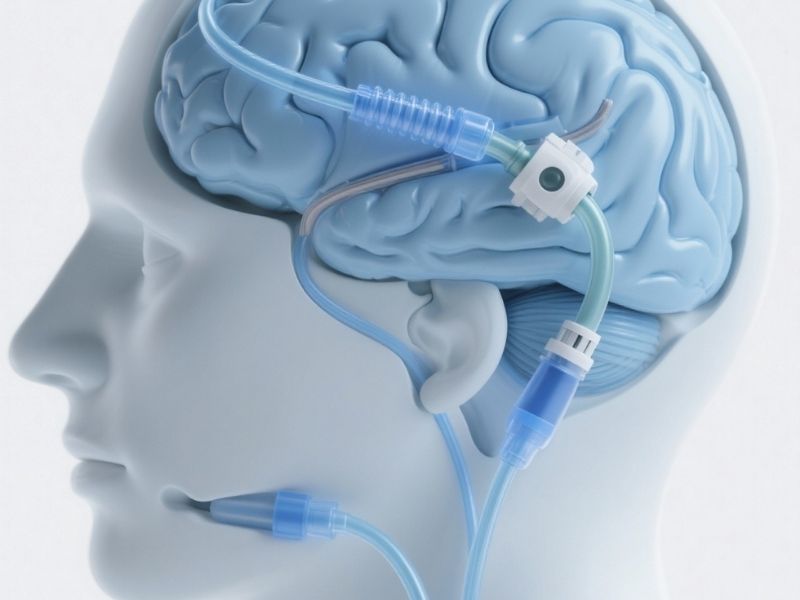
Shunt Surgery in Hydrocephalus
Hydrocephalus, which cannot be treated with medication, can be treated with the hydrocephalus shunt surgery technique. In the shunt method, entry is made through a small hole opened in the skull into the chambers where cerebrospinal fluid circulates and accumulates. A tube called a shunt, placed here, drains the fluid inside through a pipe extended under the skin to the abdominal cavity or heart cavity. In this way, the absorption that cannot be performed by the membrane takes place in the abdominal cavity or heart cavity, and treatment of hydrocephalus is aimed for. This is accomplished with the help of the shunt placed inside the skull. The pipe used for drainage is a thin, long, elastic object made of silicone material. The patient spends the rest of life with the shunt, and the drainage process continues continuously. The valve placed in the shunt ensures that the fluid is drained in the correct direction. The pump located under the scalp allows the shunt to function in a one-way and controlled manner. Shunt surgery in hydrocephalus thus ends with a technological device placed inside the body beginning to function effectively and regulating the circulation of cerebrospinal fluid.
Shunt surgery in hydrocephalus can be performed in more than one way depending on the method that may be used during the operation. Whether congenital or acquired later, there are some criteria in the shunt set. Depending on the surgeon’s knowledge and clinical experience, either a pressure-adjusted or a flow-adjusted shunt system may sometimes be used as two different tube features. Ventriculoperitoneal shunt is preferred more often.
Things to Consider After Shunt Surgery
After every surgery, the patient should exercise maximum care so that the recovery process proceeds quickly and as desired. If the situations we will list below occur after shunt surgery, you should consult your physician without delay.
- If there is redness and itching in the area where the shunt was placed,
- If nausea and subsequent vomiting occur,
- If fever is present,
- If complaints such as double vision and headache develop,
- You should consult a physician without delay.
After shunt surgery in hydrocephalus, there is a requirement to go for a check-up every 3 months. Care should be taken against infections that may develop in the area where the shunt is applied, and this area should not be touched. You need to listen carefully to what your doctor who performed the operation tells you about shunt care and follow the recommendations. It should be monitored whether the shunt is fully performing its function. Since the patient will spend the rest of life with the shunt, frequent check-ups are necessary to prevent any malfunction that may occur and to monitor whether the system is working properly.