What Should Be Considered About Endoscopic Hydrocephalus Surgery?
Hydrocephalus is defined as a disease caused by the excessive accumulation of cerebrospinal fluid in and around the brain. The treatment of this disease that develops in the brain can be performed through surgical intervention using several different methods.
What Is Cerebrospinal Fluid?
Cerebrospinal fluid is responsible for preventing the brain from being damaged by possible impacts, balancing pressure, and maintaining circulation. Hydrocephalus, which is usually seen during infancy, is the condition in which this fluid cannot be absorbed due to insufficient development of the brain membrane. As a result of the accumulation of cerebrospinal fluid, the skull bones cannot develop sufficiently, and swelling of the head is observed due to fluid buildup.
The typical physical deformity caused by hydrocephalus is as follows;
- The forehead protrudes forward.
- The front part of the head collapses toward the eyes.
- The veins become prominent.
- The upper part of the head appears larger than the lower part.
Hydrocephalus in Adults
Hydrocephalus, which is generally seen in babies, may in some cases also be observed in adults. The causes of hydrocephalus in adults are generally traumatic events. Hydrocephalus that develops as a result of blows to the head or accidents may also occur as a result of damage to the brain membrane caused by various tumors.

Hydrocephalus, which manifests itself with swelling of the head in babies, presents with different symptoms in adults because bone development has long since been completed.
What Are the Symptoms and Causes of Hydrocephalus?
The problems caused by hydrocephalus are, of course, not limited to physical deformities alone. In addition to swelling of the head and changes in physical appearance, due to the pressure exerted on the brain, the following may also occur;
- Paralysis
- Intellectual disability
- Headache
- Difficulty maintaining balance
- Memory loss
- Nausea
- Dementia
- Irritability
such symptoms may also appear.
There are two main factors that cause the problem of hydrocephalus. These factors can be listed as follows;
- An obstruction preventing cerebrospinal fluid from reaching the brain membrane
- Deformations occurring in the brain membrane
As a result of the evaluation of hydrocephalus patients, the cause of this problem is generally accepted to be obstructions. In this process, cysts and tumors that prevent the circulation of cerebrospinal fluid develop, and the condition occurs as a result of preventing the said fluid from reaching the brain membrane.

How Is Endoscopic Hydrocephalus Surgery Performed?
If the treatment process needs to be started with surgery, this operation can be performed by two different methods, considering today’s technology: shunt surgery and endoscopic hydrocephalus surgery. First, to mention shunt surgery, the accumulated fluid is drained into the heart or abdominal cavity through a tube called a shunt placed into the brain through a small hole opened in the skull. Small channels connected to this tube are passed through the body to carry out fluid drainage. After shunt surgery, which takes approximately 40 minutes, the patient’s recovery period is longer compared to endoscopic hydrocephalus surgery. In some patients, shunt treatment may be difficult, and risk factors such as displacement of the inserted tube may arise.
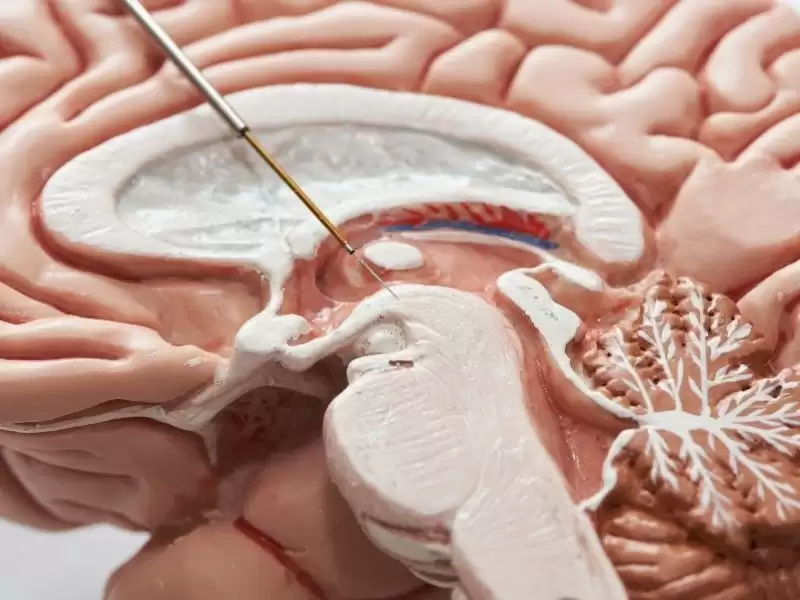
As for the answer to the question of how endoscopic hydrocephalus surgery is performed, entry is made into the patient’s skull through a tiny opening, as in shunt surgery. In some cases, this entry may also be performed through the nostrils. The neuro-endoscopic entry made in the brain provides access from the roof of the lateral ventricle to the third ventricle. Endoscopic entry is made through an opening of 7 mm. The lower part of the third ventricle is one of the pathways through which cerebrospinal fluid circulates. Since the obstructive factor causes fluid accumulation in this region, a hole is opened at the base and a bypass procedure is performed, allowing the excess fluid to be drained downward. After the 20-minute procedure, the patient can recover in a short time.
Why Endoscopic Hydrocephalus Surgery?
Entering the brain with an endoscope is less traumatic compared to the shunt method. Specialists who proceed with the help of an endoscope by obtaining a wide-angle and closer internal view can complete the other procedures in a short time with the help of the image reflected on the screen. In shunt surgery, 15 out of every 100 shunts placed in the brain must be replaced within the same year for various reasons. In this method, where the risk of infection is higher, the patient may have to undergo the same surgery 3-4 times throughout life. After endoscopic hydrocephalus surgery, the patient is discharged within 1-2 days and regains health in a short time.
Endoscopic hydrocephalus surgery can generally be performed in patients who have previously undergone shunt surgery but experienced problems with the shunt for various reasons. These problems may include displacement of the inserted shunt or exposure to infection. In addition, endoscopic hydrocephalus surgery is a physiological treatment method. There is no need for any change in the structure of the brain or cerebrospinal fluid.