
What Is a Shunt?
A shunt is a treatment method used in hydrocephalus. Hydrocephalus is the condition that occurs when cerebrospinal fluid is present in and around the brain in excessive amounts and this fluid cannot be absorbed by the arachnoid membrane tissue. Excessive fluid accumulation in the skull causes different symptoms in young children and adults.
It is known that the skull bones harden between the ages of 6 and 10. Hydrocephalus that occurs before this hardening causes skull deformities and excessive enlargement due to fluid accumulation. The symptoms seen in adults differ.
Shunt treatment is one of the treatment methods used to prevent fluid accumulation in and around the brain due to hydrocephalus.
Before Shunt Surgery
Before every surgery, it is a significant advantage for the patient’s psychological state to be very good. For this reason, the patient should be continuously informed by the specialist who will perform the surgical operation, and both the patient and the patient’s relatives should be informed about how the physical preparations should be made before the operation. If what should be done before shunt surgery is handled by the hospital staff, it can be stated as routine preparations. However, these preparations are made if the surgery needs to be performed definitively on the specified date. Sometimes, after the examinations performed before surgery, health problems may arise that prevent the shunt surgery from being performed. In that case, it would be appropriate to eliminate these problems first and then proceed with the shunt surgery. Among these examinations are tests that help reveal the patient’s general health status and evaluations such as anesthesia control.

Urinalysis
Among the examinations that should be performed before shunt surgery, urinalysis is also included. The accuracy of the results obtained from the blood test is supported by urinalysis. Urine and blood tests to be performed before surgery are necessary to assess the general health status and whether the patient is biologically ready for shunt surgery.
Brain Tomography
Ultrasound and brain tomography are among the most important examinations. Thanks to these examinations, the condition of the fluid accumulated داخل the skull and the condition of the brain are obtained visually. After the location and approximate amount of cerebrospinal fluid are determined with this examination, anesthesia evaluations are performed and the patient’s response to anesthesia is measured.
Anesthesia Examination
The shunt surgery technique is a surgical operation performed under general anesthesia. Anesthesia is an indispensable application during surgery for the comfort of both the patient and the physician. After the anesthesia examination of the patient scheduled for surgery, the responses are measured, and the surgery may be postponed in case of possible allergies. After the problem is resolved according to the roadmap created based on the responses given, the patient may enter the operating room again.
Medication Use
Before shunt surgery, you may need to stop taking the medications you use regularly for a short period. Especially before all surgeries, aspirin and its derivatives, which are blood-thinning medications, cannot be used for the period determined by your specialist before the operation, as they may prevent the avoidance of possible problems.
Harmful Habits
As with all surgeries, especially shunt surgery, it is very important to stay away from alcohol and smoking before the operation.
After the preoperative preparations are completed, the operation is started by specialists.
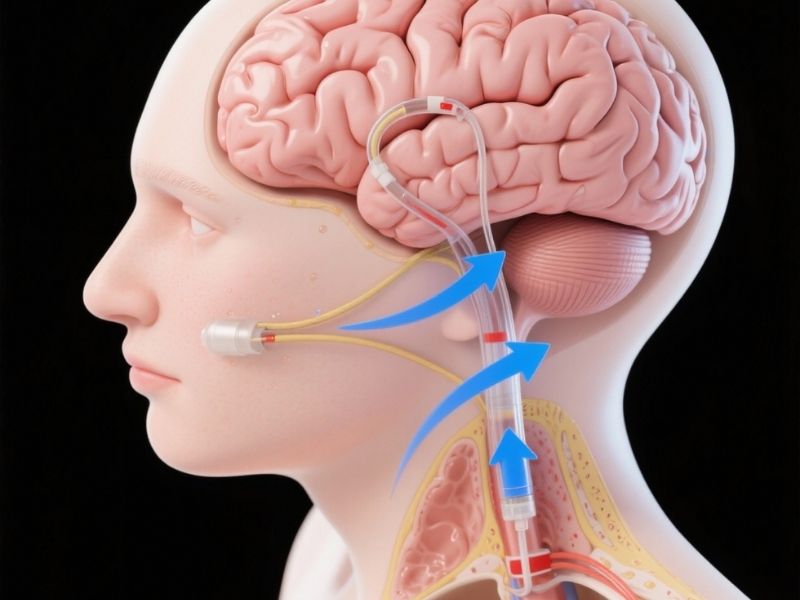
In the surgery, which lasts approximately 40 minutes, a small hole is opened in the patient’s skull, and from this area the chambers where the fluid collects are entered. Tubes called shunts are placed into the accumulation sites seen on ultrasound, and the excess cerebrospinal fluid causing hydrocephalus is drained from the brain into the abdominal cavity with the help of silicone tubes extended under the skin.
After Shunt Surgery
The program that should be followed carefully before shunt surgery should also be applied with the same sensitivity after the surgery under a different program heading. Just as the program applied before shunt surgery leads the patient to a successful operation, the program that should be followed with the same sensitivity after the operation will mean a successful recovery process. Every surgery carries risks; as long as you do not neglect your doctor’s warnings and your postoperative check-ups, you can minimize the symptoms likely to occur after the operation. The first of the rules that should be followed after shunt surgery can be answered as being careful to avoid the risk of infection after the operation and coming for check-ups at the intervals determined by your doctor.
Since this technological device, which is attached to the patient’s body in shunt surgery and will accompany the patient for life, carries the risk of malfunctioning at any time and causing different symptoms in the area where it is located, the patient should come for frequent follow-up visits, observe the functioning of the placed shunt, and consult the doctor immediately when any abnormal situation is noticed.
After shunt surgery, hydrocephalus symptoms may continue for a while; in advanced cases, some of the symptoms caused by the disease may even become permanent due to the severe pressure exerted on the brain. In general, ongoing complaints after the operation can be eliminated by physicians through different treatment methods according to the disease.