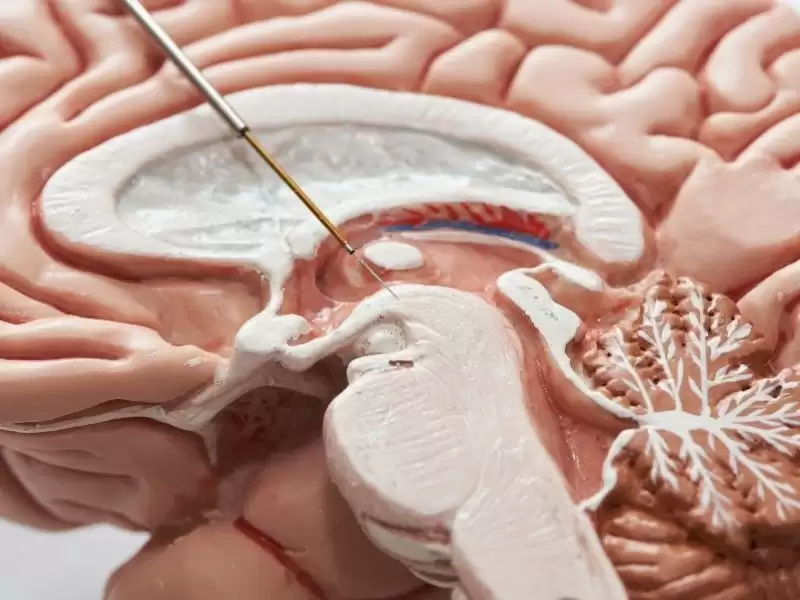
What Is Normal Pressure Hydrocephalus?
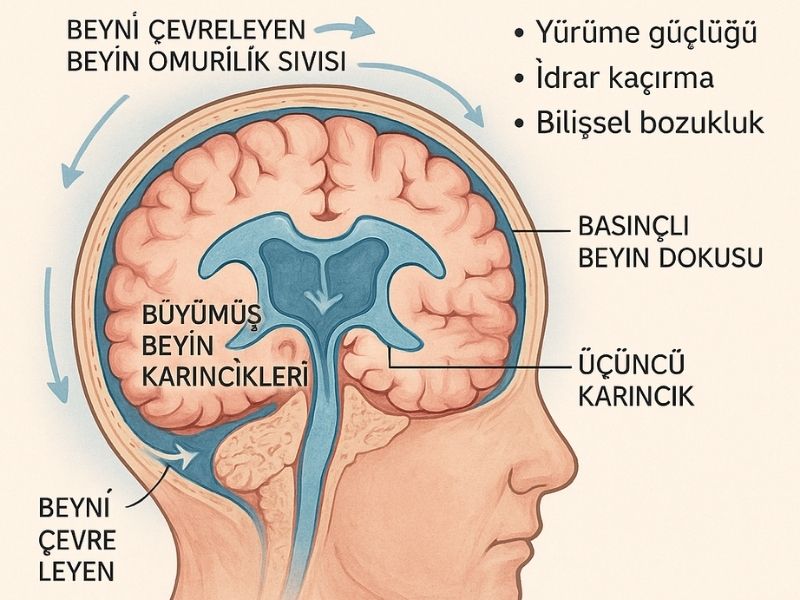
Normal pressure hydrocephalus (NPH) is a disease of older age that presents with symptoms of gait disturbance, progressive dementia, and urinary incontinence.
What Are the Symptoms of Normal Pressure Hydrocephalus?
Gait Disturbances
Balance problems and difficulty walking are the first and most commonly observed complaints. The steps are often wide-based, short, and slow. Because they have difficulty lifting their feet and climbing stairs, they fall frequently.
Mild Dementia
It includes reduced interest in daily activities, forgetfulness, difficulty coping with routine tasks, and impairment of recent memory. Because this symptom is not very severe, it is often neglected and considered a natural part of aging.
They are often not aware of the problems they have and may even deny them. In some cases, cognitive changes can only be detected through neuropsychological evaluation.
Impairment of Bladder Control
In mild cases, it manifests as frequent urination, while in advanced cases bladder control becomes completely impaired. Normal pressure hydrocephalus patients are often over the age of 60, and because such symptoms are thought to be normal in this age group, people generally think they have to live with these problems and try to adapt themselves to these changes occurring in their bodies.
Symptoms seen in normal pressure hydrocephalus may also mimic some other health problems that can occur in older adults. For example, the cognitive symptoms observed may be evaluated as early-stage Alzheimer’s disease. Likewise, balance and walking problems may be considered Parkinson’s disease.
How Is NPH Diagnosed?
The main methods used in the diagnosis of NPH are brain MRI, investigations of CSF dynamics, neuropsychological assessments, and metabolic examinations. When NPH is suspected, the most commonly used method to decide whether shunt treatment will be appropriate for patients is to reduce CSF pressure by removing cerebrospinal fluid through lumbar puncture (LP) and to observe whether there is clinical improvement in the patient.
How Is NPH Treated?
Today, the most commonly used and generally the only possible treatment option is the surgical placement of a system called a shunt, which connects the CSF pathways to another part of the body where absorption can occur. For this purpose, the most frequently used site is the peritoneum in the abdomen, and the system used is called a ventriculoperitoneal shunt. After surgery, all parts of the shunt system remain under the skin and nothing will be visible from the outside.