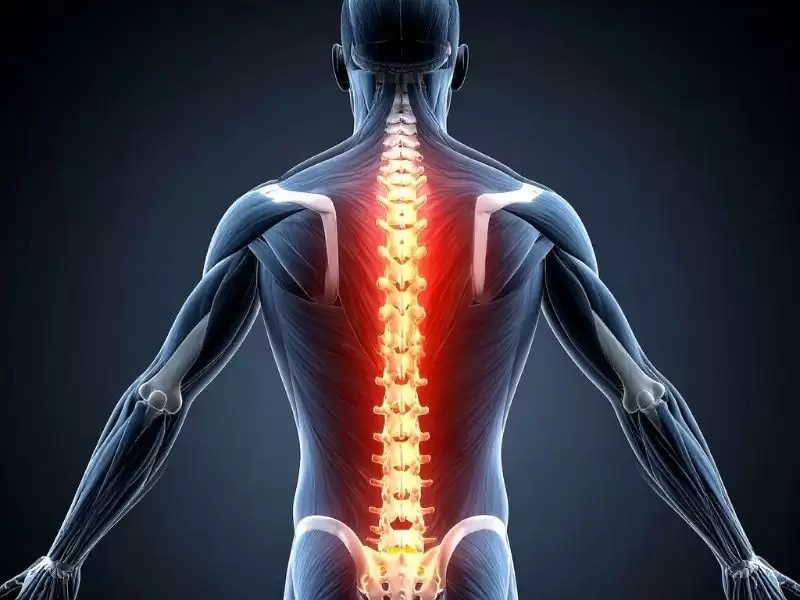
What Is Spinal Canal Narrowing?
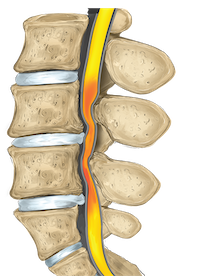
The lumbar spine consists of a series of connected bones called vertebrae. The bones surround the spinal canal, within which the spinal cord is located and runs between the vertebrae. The intervertebral discs between the vertebrae, facet joints, and connective tissues (ligamentum flavum) are other structures surrounding the spinal canal.
With advancing age, the discs between the vertebrae lose their sponge-like structure and begin to contain less water. This causes a decrease in disc height and bulging of the hardened disc toward the spinal canal.
There is a connective tissue called ligamentum flavum that covers the spinal cord and the nerves that branch from it at each level and go to both legs, protecting them from external effects. As a result of advancing age or increased calcification related to osteoporosis, this connective tissue thickens and hardens. The hardened ligamentum flavum compresses the spinal cord and creates pressure. All of these changes cause narrowing of the spinal canal in the lumbar region. This condition is called “spinal stenosis” or “narrow canal.”
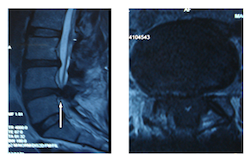
In the lumbar MRI examination, it is seen that at the L4-5 level, the spinal cord and nerves passing through are compressed due to narrowing in the spinal canal caused by herniation, ligamentum flavum, and facet joint enlargement.
The spine is of great importance not only because it is the bone structure that enables a person to stand upright, but also because it houses the entire nervous system and the spinal cord. The spinal cord is an important structure that provides communication between the brain and the limbs in humans.
For various reasons, some people may experience different problems in the spine. Among these problems, the most common one is spinal canal narrowing. Spinal canal narrowing means narrowing of the canal through which the spinal cord and nerves pass due to congenital causes or traumatic events, and as a result, pressure is applied to the nerves. As a result of spinal canal narrowing in the spinal structure located in the back region between the neck and lower back, the main symptoms are usually neck or lower back pain. However, since neck or lower back pain can also be the main symptom of a herniated disc problem, a detailed examination is very important for a definite diagnosis.
Spinal canal narrowing is generally seen in the lumbar vertebrae because they carry a large portion of the body weight.
With the pressure applied to the nerves in this region, complaints such as loss of sensation or pain in the arms and legs arise, which significantly affect daily life.
What Causes Spinal Canal Narrowing?
Congenital spinal narrowing is related to a structural disorder, but the causes of spinal canal narrowing that develop later are mostly due to lack of exercise and inactivity.
In addition to these causes, working in heavy jobs, gaining excess weight, arthritis, scoliosis, lumbar disc herniation, smoking, age-related spinal calcification, and genetic factors are triggering elements of this condition. Spinal canal narrowing, which most commonly begins to appear after the ages of 45-50, may leave the patient bedridden if not diagnosed early and treated. In patients living with congenital spinal canal narrowing, findings are more likely to appear after the ages of 30-40.
Symptoms of Spinal Canal Narrowing
Narrowing may occur throughout the spine, as well as in the neck and especially the lumbar regions. Most encountered cases are narrowing occurring in the lumbar region. Narrowing occurring in the neck region may cause damage to the spinal cord and, accordingly, cause the patient to experience balance problems. Narrowing occurring in the lumbar region may cause lower back pain, as well as leg pain, numbness in the legs, and loss of strength. Compared with standard leg pain, pain caused by narrowing usually spreads from the hip to the knee area. In some cases, pain may be felt throughout the entire leg. The pain may also become more severe with prolonged standing or walking. Likewise, activities such as sitting, squatting, or lying down may also cause an increase in pain severity.
One of the details that should be mentioned regarding the symptoms of spinal canal narrowing is that patients generally tend to walk leaning forward because the diameter of the spinal canal widens in that position. Their walking distances become shorter.
In advanced cases, inability to hold urine may occur due to involvement of the sacral roots. Finally, narrowing occurring in the neck may cause pain, weakness, and numbness in both arms. Again, in advanced cases, balance loss caused by the narrowing that creates pressure on the spinal cord may not improve even if the disease is treated. For this reason, it is necessary to consult a specialist doctor without delay.
Treatment Process
With magnetic resonance imaging (MRI), it is understood whether the spinal nerves are under pressure due to narrowing. Spinal canal narrowing can also be diagnosed by computed tomography. After a definite diagnosis is made, the treatment process is started. Depending on whether the case is advanced or not, different methods related to spinal canal narrowing treatment are developed and applied by the physician.
In early-stage cases, strengthening exercises for the lower back muscles may be recommended by the physician, and physical therapy may also be advised. The muscles of the lower back and its surrounding area are strengthened with the help of exercise, thereby creating a natural corset in the body. If the case is not at a level that can be resolved with physical therapy and exercises, medication support is used. By making injections around the spinal cord membrane, especially the pain symptoms caused by spinal canal narrowing are tried to be relieved. However, these injections usually improve the patient’s quality of life for up to 3 months; if the same problems are encountered afterward, the only remaining solution is surgical operation.
Surgical treatment is the most effective treatment method. Through surgery, direct contact is made with the source of the problem and the issue is tried to be eliminated. With the operation called lumbar decompression, the pressure mostly applied on L4 and L5 in male patients is removed and the patient is relieved.
Postoperative Period After Spinal Canal Narrowing Surgery
Patients generally stand up on the day of surgery and are discharged within the following 2-3 days. The postoperative stages are as follows;
- Since the patient will spend the first week at home, the exercises taught by the specialists of the spine center physiotherapy department should be performed correctly at the specified intervals.
- After the first week, patients should participate in the exercise program applied by the spine center physiotherapists, which aims to develop the trunk core muscles, in order for the treatment process to progress successfully.
- From the second week onward, patients can go outside and may even perform the specified exercises outdoors at the stated intervals.
The postoperative period is a period that should be evaluated well in order for the treatment to proceed successfully and to prevent symptoms that may occur after surgery. After spinal canal narrowing surgery, patients should not lift heavy objects for a long time, and should rest more and participate less in heavy work activities that strain the spine.