What Is a Herniated Disc is one of the first questions many people wonder about when experiencing lower back pain. Today, due to desk work, a sedentary lifestyle and incorrect lifting habits, herniated disc disease is seen more frequently in all age groups. With early diagnosis and the right treatment plan, symptoms of a herniated disc can be controlled and quality of life can be preserved. For this reason, pain that begins in the lower back and spreads to the leg should always be evaluated by a specialist.
What Is a Herniated Disc?
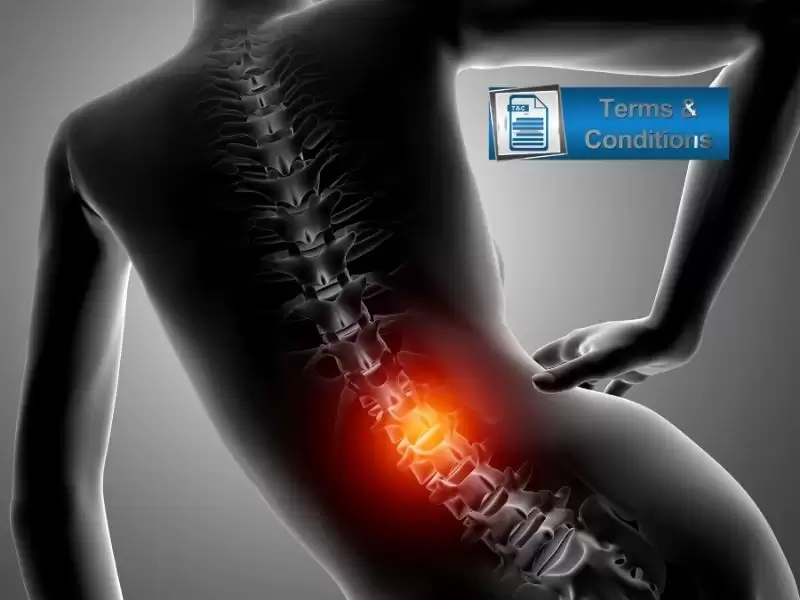
Between the vertebrae in the lower back are discs that absorb shock and help movement. When the outer layer of these discs wears down over time or tears due to sudden strain, the gel-like inner structure may protrude outward. This condition, commonly known as a herniated disc, is medically referred to as lumbar disc herniation. The clearest answer to the question what is a herniated disc is this: the disc tissue protrudes and approaches or contacts the nerve roots, causing related symptoms. In some people, disc protrusion may occur without symptoms; complaints usually become noticeable when pressure develops on the nerve.
Herniated disc disease often appears with pain that begins in the lower back and may spread to the hip and leg. The reason for this spread is that nerves originating from the lumbar spine extend along the leg. The L4-5 and L5-S1 levels are most frequently affected. In addition to pain, neurological symptoms such as numbness, tingling and loss of strength may occur. For this reason, evaluation by a neurosurgery specialist is important to understand the level of nerve involvement.
What Causes a Herniated Disc?
What causes a herniated disc does not have a single answer; in many patients multiple factors come together. As discs age, their water content decreases, flexibility declines and the outer layer can crack more easily. Sitting for long periods, incorrect lifting techniques, sudden twisting movements, repetitive strain, excess weight and smoking may negatively affect the disc structure. In some individuals, genetic predisposition may also play a role.
In daily life, even cases described as “it happened suddenly” usually have an underlying wear process that prepares the ground. Lifting a heavy load while bending forward and twisting the lower back may increase pressure on the disc.

In addition, a sedentary lifestyle also creates risk because weakened core muscles support the spine less effectively and more load is placed on the discs. In short, the answer to the question what causes a herniated disc is usually a combination of lifestyle factors, biological aging and mechanical strain.
What Are the Symptoms of a Herniated Disc?
Herniated disc symptoms may vary from person to person. The most common complaint is herniated disc pain; sometimes it remains limited to the lower back, and sometimes it spreads to the hip and the back or outer side of the leg. Pain radiating to the leg is commonly known as sciatica and usually indicates nerve root involvement.
Numbness, tingling, burning sensation and weakness in certain muscle groups may also occur. Among the symptoms of a herniated disc pressing on a nerve are leg pain that increases during long walks, difficulty standing for long periods, and trouble walking on the heels or toes. Pain increasing with coughing, sneezing or straining is also a typical clue because these actions temporarily increase spinal pressure.
The question how to recognize a herniated disc often concerns many patients. To make a simple distinction, lower back pain alone does not always mean a herniated disc. When symptoms such as pain radiating to the leg, numbness and loss of strength accompany it, the likelihood of a herniated disc increases. However, symptoms such as urinary incontinence, difficulty urinating, rapidly increasing weakness in both legs or numbness in the groin area may require urgent medical evaluation.
What Are the Stages of a Herniated Disc?
A herniated disc is not simply a condition of “present or absent”; the form of the protrusion and its effect on the nerve can be considered in different stages. In the early stage, weakening and bulging of the outer layer of the disc may occur, and complaints may mostly be concentrated in the lower back. As the protrusion becomes more pronounced, proximity to the nerve root increases and leg pain becomes more prominent. In more advanced cases, disc material may move further outward and create pressure on the nerve, making neurological symptoms such as numbness, reflex changes and muscle weakness more likely.
Staging becomes meaningful when imaging findings and examination results are evaluated together. A protrusion that appears large on imaging may not always cause severe symptoms, while a smaller contact may sometimes lead to significant pain. Therefore, clinical examination and the patient’s complaints should remain central in evaluation.
Frequently Asked Questions About Herniated Disc
What Helps a Herniated Disc?
Proper exercise, weight control, short-term pain management and posture training may help many people feel relief. The most appropriate plan should be determined with specialist evaluation.
Can a Herniated Disc Heal on Its Own?
In many patients symptoms may decrease within weeks. However numbness, loss of strength or persistent leg pain require medical evaluation.
What Does a Ruptured Herniated Disc Mean?
This term is commonly used to describe disc material protruding more prominently. The important factor is whether nerve compression or neurological symptoms develop.
Is a Herniated Disc the Same as Spinal Slippage?
No. In a herniated disc the disc tissue protrudes, whereas spinal slippage involves displacement of one vertebra relative to another.
At What Size Does a Herniated Disc Become Dangerous?
The measurement alone is not decisive. The risk is evaluated according to nerve compression, loss of strength and bladder or bowel problems.
Is Walking Good for a Herniated Disc?
In many people, controlled walking at a pace that does not increase pain can be beneficial. If pain increases, the program should be adjusted.
Can Someone with a Herniated Disc Exercise?
Yes. Exercise can be done with appropriate activities and correct technique. Heavy lifting and sudden twisting movements should be avoided.
How Should People with a Herniated Disc Sit?
Sitting with lumbar support, keeping hips and knees at roughly the same level, taking frequent breaks and avoiding long periods in the same position is recommended.
Can People with a Herniated Disc Become Pregnant?
Generally yes. However medical follow-up and appropriate exercises are important due to the increased load on the lower back during pregnancy.