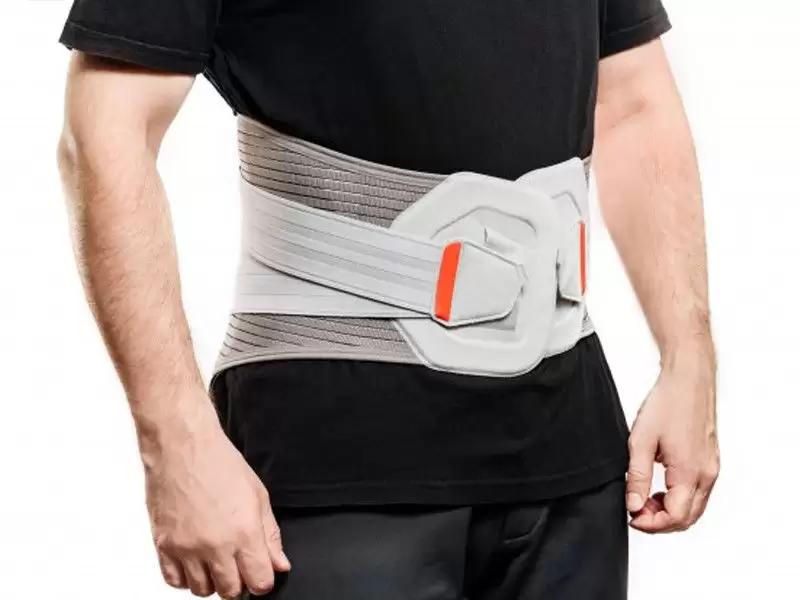
Surgical Methods Used in Lumbar Disc Herniation
Surgical procedures naturally make all patients anxious. However, in solving some problems and restoring the patient to health, surgical methods and operations must absolutely be performed. This is also the case in the treatment of lumbar disc herniation with surgery.
The lumbar disc herniation problem is a condition that negatively affects the patient’s daily life, causes intense pain, leads to weakness in the legs and feet, and creates limitation of movement. At the same time, in advanced cases, it may also lead to serious problems such as weakness, sexual impotence, inability to urinate, or urinary incontinence. The treatment methods for lumbar disc herniation can be listed as follows;
- Rest
- Exercise
- Medication treatment
- Physical therapy
- Supportive treatment methods (acupuncture),
- Treatment with surgery (open standard discectomy, microdiscectomy)
In the initial stage of lumbar disc herniation, methods such as rest and medication treatment may be applied. During the diagnosis stage, the degree of the lumbar disc herniation is also determined. Thus, the most appropriate treatment method can be applied.
In the diagnosis process of lumbar disc herniation, in addition to methods such as physical examination and magnetic resonance imaging (MRI), various nerve tests are also performed. In this way, the degree of the hernia and the degree of deformation of the disc and region where the hernia has formed can be evaluated.
If the patient has not benefited from medication treatment or physical therapy applications, if problems such as urinary incontinence and sexual weakness have begun to occur, and if disc rupture is present, treatment with surgery may be considered.
Lumbar disc herniation surgery can be performed today with two different methods. These are;
- Open standard discectomy
- Microdiscectomy (lumbar disc herniation surgery with microsurgery)
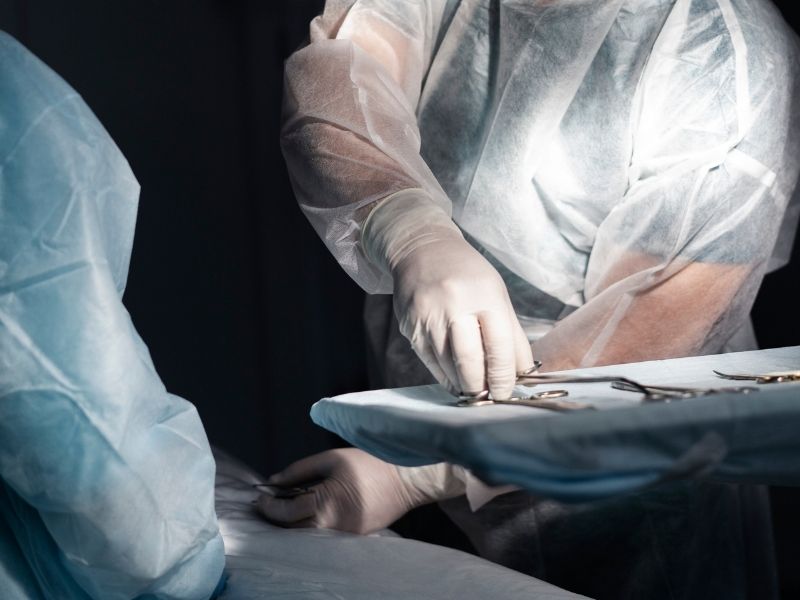
Open Standard Lumbar Disc Herniation Surgery (Discectomy)
This is the lumbar disc herniation surgery method, also defined as open surgery, which has been performed since earlier years. In this method, an incision of 5 to 15 centimeters is made in the area where the hernia has formed, depending on the need. In the discectomy method performed under general anesthesia, the muscles are also separated in order to reach the spinal cord.
In open standard discectomy, which carries a risk of infection depending on the size of the incision made;
- The recovery period is long.
- There is a risk of bleeding and infection.
- Hospitalization is required.
- The feeling of pain after surgery is intense.
- Damage may remain at the spinal nerve root.
When it is decided to perform open standard lumbar disc herniation surgery, the procedure must absolutely be carried out by a specialist and experienced surgeon in the field. Otherwise, the risks that may arise during the surgery process increase. In addition, during the post-operative recovery period, the doctor’s recommendations must absolutely be followed. At the same time, there are certain points that should be considered. These can be listed as follows;
- The medications recommended by the doctor should be used to ensure pain control.
- If there is a need for physical therapy, it should not be neglected.
- Movements such as walking, bending, sitting, and lying down should be performed as recommended by the doctor.
- When something needs to be picked up from the ground, one should squat instead of bending.
- Heavy lifting should be avoided.
- Swimming and similar muscle-strengthening exercises should be performed under doctor supervision.
- Ideal weight should be maintained.
Lumbar Disc Herniation Surgery with the Microsurgical Method
Technological developments are used very extensively in the field of medicine. Their use in diagnosis and treatment methods provides a highly comfortable process for both patients and doctors. As a result of technological developments, the microsurgical method can also be used in the treatment of the lumbar disc herniation problem with surgical methods.
Today, in both lumbar disc herniation and cervical disc herniation surgeries, the microdiscectomy method is applied more frequently than open surgery. The reason for this is that, in addition to the comfort it offers for both the doctor and the patient, it provides a safer operation process. Lumbar disc herniation surgery with the microsurgical method;
- Shortens the recovery period.
- Minimizes the risk of abnormal bleeding and infection.
- A smaller incision is made, and there is no need to separate the muscles.
- The risk of nerve damage is minimal.
- The risk of damage to the spinal nerve root is low.
- There is no need for hospitalization.
In lumbar disc herniation surgery with the microsurgical method, the patient is not fully put to sleep; instead, numbness is provided with local or epidural anesthesia. Thus, the patient remains awake during the operation and can inform the doctor in case of any intervention on the nerves. In this way, the risk of nerve damage is eliminated.
After a detailed examination and general health evaluation, the patient is taken to the operating room and positioned face down or on the side. After the anesthesia procedure, a small incision is made in the herniated area and the region is entered. After the procedure, the area is closed and the patient is helped to stand up.
After both the microsurgical procedure and the open standard lumbar disc herniation surgery, the doctor’s recommendations must be followed completely.