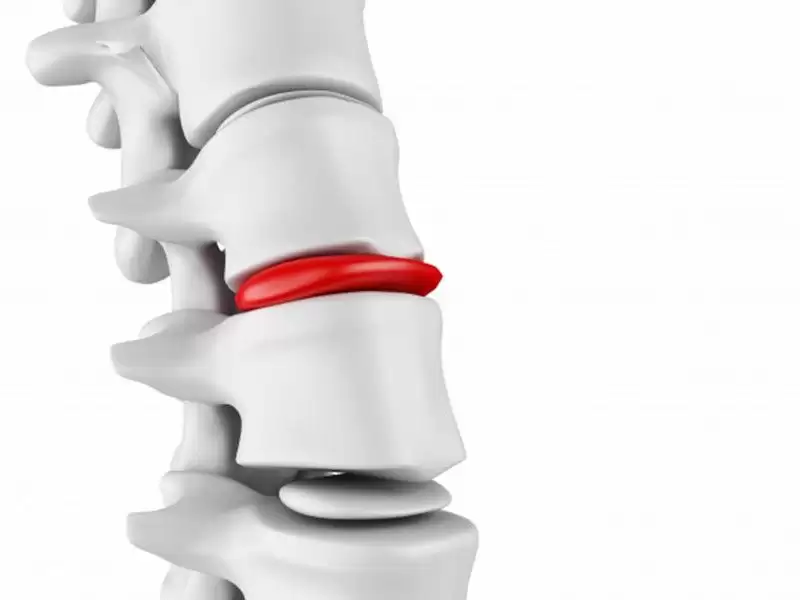
Lumbar Disc Herniation
While the spinal bones enable a person to stand upright, they also provide the ability to move in a balanced way. The spinal bones consist of three different structures called the spinal column, ligaments, and discs. Deformation, displacement, or rupture of the discs that act as cushions between two vertebrae in the lumbar region is defined as lumbar disc herniation.
What Are the Symptoms of Lumbar Disc Herniation?
The primary complaint experienced by a patient with lumbar disc herniation is, of course, pain. However, in addition to pain, certain symptoms that negatively affect daily life comfort may also be seen, and these can be listed as follows;
- Limitations in movement
- Numbness in the legs and feet
- Severe pain felt in one or both legs
- Difficulty walking or sitting
Lumbar disc herniation must definitely be treated. Otherwise, the problem will progress and lead to much more serious symptoms. The problems that may occur as a result of the progression of lumbar disc herniation can be listed as follows;
- Impotence
- Fatigue easily
- Urinary incontinence
- Inability to urinate and loss of control
- Loss of balance
- Inability to walk
People experiencing these complaints are advised to consult a specialist doctor without delay. As long as lumbar disc herniation remains untreated, it will continue to affect the patient’s life in a severely negative way.

Diagnosing lumbar disc herniation is quite a comfortable process today, thanks to technological developments. In addition to a detailed physical examination, lumbar disc herniation can be diagnosed with magnetic resonance imaging (MRI). In order to obtain information about the severity of the problem, nerve tests (EMG) and discography may also be performed.
Who Is Most Commonly Affected by Lumbar Disc Herniation?
Lumbar disc herniation is a very common problem today. Research shows that lumbar disc herniation, which is seen equally in women and men, is generally observed in people between the ages of 35 and 50. Due to their spinal structure, tall people have a higher risk of experiencing lumbar disc herniation compared to shorter people. In addition, it is seen more frequently in people who work in physically demanding jobs, lift heavy objects, or work in jobs that require standing or sitting for long periods.
Treatment of Lumbar Disc Herniation
Treatment of lumbar disc herniation must definitely be carried out by experienced doctors in the field. Both surgical methods and physical therapy methods must be performed carefully and properly. Otherwise, permanent problems and disabilities may occur in the patient. In order to eliminate all risk factors that may arise during the treatment process, care should be taken in choosing the doctor.
What Are the Treatment Methods for Lumbar Disc Herniation?
Before deciding which treatment method will be applied in lumbar disc herniation, a detailed testing and examination process is carried out. An appropriate treatment plan is made by considering the severity of the problem and the complaints it causes in the patient’s life.
At the initial stage of lumbar disc herniation, there are certain points the patient should pay attention to in daily life. These can be listed as follows;
- The patient should not carry any heavy weight.
- The waist should not be bent forward, backward, or sideways.
- When something needs to be picked up from the ground, one should squat down.
- The lumbar hollow must be supported while sitting.
- One should not reach upward.
- Exposure to drafts or wind should be avoided, and the lumbar area should be kept warm.
- A lifestyle away from stress should be established.
- Plenty of rest should be taken.
In lumbar disc herniation, rest and medication treatment are primarily applied. If the muscle relaxants and pain relievers recommended by the doctor do not help, physical therapy methods may be applied. The physical therapy process must definitely be carried out by specialist physiotherapists. During this process, an increase in pain may be observed, but the treatment process should not be left unfinished.
In the treatment of lumbar disc herniation, procedures such as acupuncture, hand massage, or traction that help relax the muscles may also be applied. However, these applications must be performed by reliable and specialist individuals. If the complaints of patients with lumbar disc herniation continue and increase over time, and if the treatment methods mentioned above do not provide any benefit, surgical intervention may be needed. Lumbar disc herniation surgery can now be performed quite comfortably and safely with the microsurgical method.
Situations in which lumbar disc herniation surgery may be needed;
- Loss of sexual power
- Loss of strength and severe pain
- Loss of strength in the legs
- Detection during follow-up that the hernia has ruptured and become a free fragment
During lumbar disc herniation surgery, it is preferred that the patient remain awake. The reason for this is the need for the patient to respond if the surgeon makes any intervention on the nerves. In this way, the risk factors arising from the surgery are prevented. Patients with lumbar disc herniation are definitely advised to do swimming exercises. At the same time, getting beneficial sunlight and adopting a lifestyle away from stress are also effective in preventing lumbar disc herniation and the pain it causes. In addition, consuming foods that strengthen bone and muscle tissue and adding foods high in calcium to meals will also help reduce the complaints caused by lumbar disc herniation.