
What Is Meningioma?
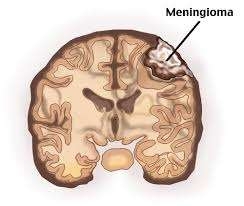
Most meningiomas developing from the membrane covering the brain and spinal cord are benign and slow-growing tumors.
Why Do Meningiomas Occur?
Genetics, previous radiation applied to the head region, a history of breast cancer, or neurofibromatosis type 2 are conditions that increase the risk of developing meningioma.
How Often And In Whom Are Meningiomas Seen?
Meningiomas make up 20% of brain tumors and are seen mostly after the age of 60. Their frequency tends to increase with advancing age. They are seen twice as often in women as in men.
What Are The Signs And Symptoms Of Meningiomas?
Meningiomas are generally slow-growing tumors that grow inward. Therefore, the tumor may reach a considerable size before any symptoms appear. Symptoms are generally related to the pressure created by the growing tumor on the brain and include headache and loss of strength in one arm or leg. In addition, seizures, personality changes, or vision problems may also occur.
How Is Meningioma Diagnosed?
Contrast-enhanced Magnetic Resonance Imaging (MRI) and/or Computed Tomography may be performed. These tests provide valuable information about the size, location, and type of the tumor. However, the definitive diagnosis can only be made by pathological examination of the tissue taken from the tumor during surgery.
How Are Meningiomas Treated?
In the treatment of meningiomas, if the tumor is in a location that can be reached by surgery, surgical removal is preferred. Some tumors may not be accessible by surgical methods. The aim of surgery is both to take a sample from the tumor to confirm the diagnosis and to remove the tumor completely. If complete removal of the tumor is not possible, partial removal may be performed. Even in this case, a reduction in the signs and symptoms related to the tumor is observed. Another treatment option such as radiotherapy may also be applied for the remaining tumor tissue.
Is It Possible For Meningiomas To Recur After Treatment?
Most meningiomas are benign and can be treated with surgery. However, if all tumor cells cannot be removed during surgery or cannot be destroyed by other treatment methods, the tumor may grow again.