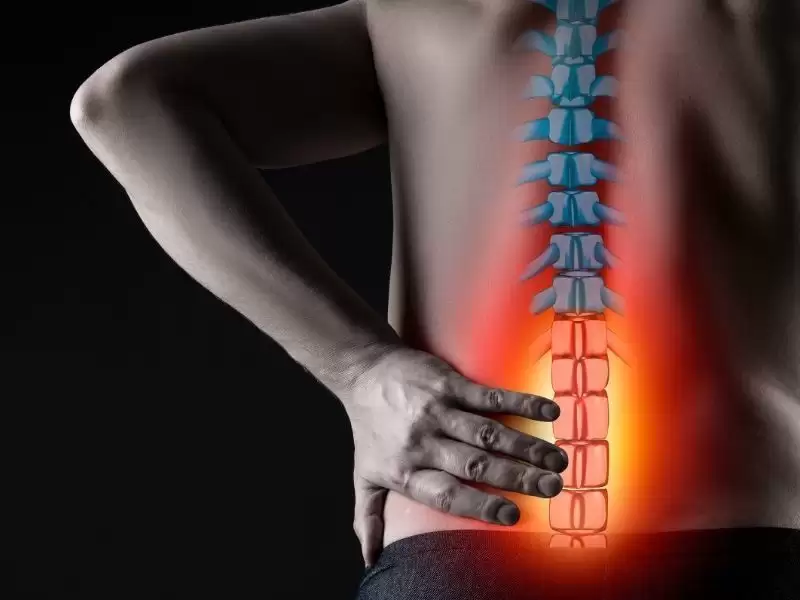
Cervical Hernia
There are 7 vertebral bones in the neck region starting from the base of the skull. Connective tissue surrounds each vertebral bone, and there are discs between two vertebral bones. The nerves emerging from the vertebrae in the neck region provide sensory communication between the arms and the head. However, due to certain reasons, deformation may occur in the discs between the vertebrae. This condition is called cervical hernia.
What Is Cervical Hernia?
As a result of trauma or advanced age, gel-like degeneration may occur in the connective tissues surrounding the cervical vertebrae, the discs between them, or the structure defined as the nucleus pulposus. This condition is called disc herniation or cervical hernia. Cervical hernia significantly affects the daily life of the person experiencing the problem and causes limitation of movement. At the same time, if left untreated, it may progress and lead to much more serious problems and permanent disabilities. For this reason, it is recommended that people experiencing the complaints listed below consult a specialist doctor without delay.
What Are the Causes of Cervical Hernia?
More than one factor may cause the cervical hernia problem. The main causes of cervical hernia can be listed as follows;
- Weakness in the neck muscles due to genetic reasons
- Incorrect movement
- Incorrect sleeping position
- Smoking
- Traumatic events such as accidents, impacts, and falls
- Using a computer for a long time
- Incorrect massage applications
- Incorrect movements of the arms

Cervical hernia is among the health problems seen quite frequently in society. There are certain risk factors in the emergence of this problem. These risk factors can be listed as follows;
- If there is a history of cervical hernia in the family, genetic weakness in the muscles may cause cervical hernia.
- Smoking affects the person's general health condition and, at the same time, significantly weakens the neck muscles.
- Incorrectly performed massage applications by non-professionals may cause disruption of the balance between the vertebrae.
- Frequently performing strenuous movements such as housework, heavy lifting, adopting an incorrect sleeping position, hanging curtains, and cleaning windows also causes damage to the vertebrae in the neck region.
What Are the Symptoms of Cervical Hernia?
The most obvious complaint caused by cervical hernia is, of course, the feeling of pain. In addition, the other symptoms can be listed as follows;
- Intense pain in the neck, shoulders, and arms
- Loss of strength in the arms
- Difficulty walking and balance problems
- Difficulty holding any object in the hand or dropping it
- A feeling of numbness, especially in the fingertips
Cervical hernia symptoms are felt more intensely if treatment is not received. At the same time, pain and the feeling of numbness are sometimes felt more severely, while at other times they appear more mildly.
The neck region is of great importance both for daily life comfort and for the nervous system to continue functioning properly. For this reason, massage should not be done by non-professionals, heavy lifting should be avoided, and movement should be carried out in a controlled manner.
It is possible to treat the cervical hernia problem in more than one way.
Cervical Hernia Treatment
Before cervical hernia treatment planning, the patient must be examined in detail, the general health condition must be evaluated, and the cervical hernia problem must be diagnosed definitively. In the diagnosis process of the cervical hernia problem, evaluation of the detailed medical history and detailed physical examination are effective. In measuring the degree of hernia formation, MRI (magnetic resonance imaging) and various nerve tests are needed.
In initial-stage cervical hernia problems, the most effective treatment method is rest. At the same time, various medications may be used to provide pain control. In addition, physical therapy applications and certain lifestyle changes that can be implemented also play an effective role in the treatment process.
If numbness and weakness are felt in the arms of the patient experiencing the cervical hernia problem, and at the same time no result is obtained from any of the applied non-surgical treatment methods, treatment with surgery may be resorted to.
Cervical hernia surgery can now be performed comfortably and safely with microsurgical methods as a result of technological developments. With this method, a minimal incision is made in the area where the hernia is located, and the procedure is performed through this incision. In the cervical hernia surgery method with microsurgery, the risk of infection and excessive bleeding is at a minimum level. At the same time, the post-operative recovery process is quite short, and the patient can return to daily life within a few days.