
html
Lumbar Disc Herniation Surgery
The lumbar region, which enables a person to stand upright and move, and the health of the lumbar region are of great importance. At the same time, the spinal alignment in the human body is based on a flawless system, but for various reasons, certain deformities may occur in the spinal system located in the lumbar region. The most common problem experienced in this area is lumbar disc herniation.
What Is Lumbar Disc Herniation?
The spinal structure consists of bone, ligaments, and a tissue called a disc that acts as a cushion. Over time, deformities may occur in the discs due to strain or advanced age. Discs that become damaged, slip out of place, or protrude outside the vertebral bone lead to the problem of lumbar disc herniation. The factors that cause lumbar disc herniation can be listed as follows;
- Being above ideal weight
- Sitting for long periods
- Standing for long periods
- Heavy lifting
- Working in physically demanding jobs
- Stress
- Weak bone tissue
- Various traumatic events
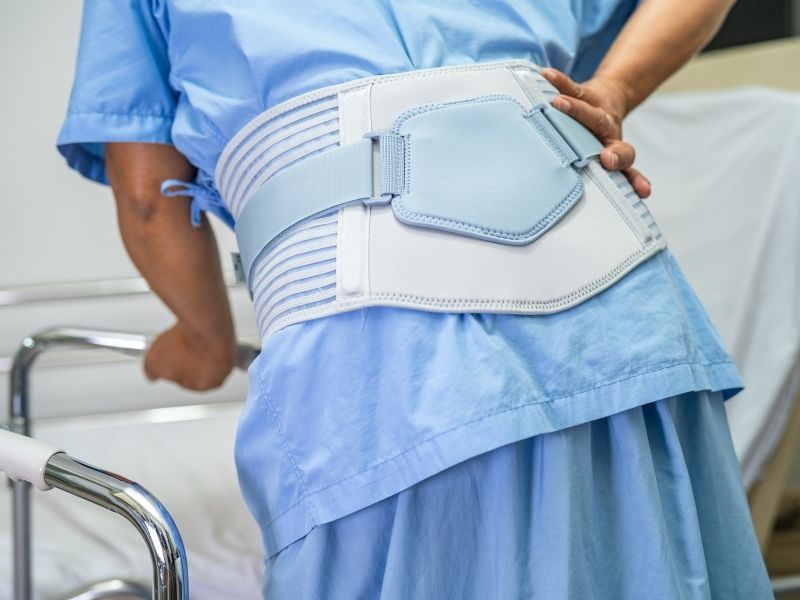
People experiencing lumbar disc herniation may face certain problems that negatively affect daily life. These problems may be felt with different severity depending on the degree of the hernia. The symptoms of lumbar disc herniation can be listed as follows;
- Pain in the legs and feet
- Weakness in the feet and legs
- Loss of balance
- Inability to control urination
- Sexual impotence
Lumbar disc herniation can be treated with various methods. In addition to rest, medication, physical therapy, and various supportive treatment methods, it can also be treated with surgical methods. If the patient does not improve with non-surgical treatment methods or if a ruptured disc is diagnosed, lumbar disc herniation surgery may be planned.
Lumbar Disc Herniation Surgery
Two different methods may be used in the surgical treatment of lumbar disc herniation. These are open standard discectomy and microdiscectomy. In the open standard discectomy method, the procedure is performed by making an incision in the patient’s lower back, while in the microdiscectomy method, microsurgery is performed through small openings. Today, lumbar disc herniation surgeries are frequently performed using the microdiscectomy method.
Compared with the open standard discectomy procedure, the microdiscectomy method offers certain advantages. These can be listed as follows;
- The risk of bleeding and infection is minimal.
- The recovery process is short.
- It is more economical because there is no need for hospitalization.
- Since it is performed while the patient is awake, damage to the nerves is prevented.
The patient’s condition, the degree of the lumbar disc herniation, and the doctor’s approval are effective in determining which method will be used. After both open standard discectomy and microdiscectomy procedures, the goal is to eliminate the patient’s limitation of movement, relieve pain, and restore quality of life.
What Is Open Standard Discectomy?
It is a technique that has been used for many years in lumbar disc herniation surgery. In this method, which is performed under anesthesia while the patient is asleep, hospitalization is required. The patient is positioned face down or brought into a squatting position. The damaged disc is treated by making an incision of approximately 5 centimeters in the area of the spine affected by the hernia.
What Is Microdiscectomy?
As technology advances and scientific studies in medicine increase, different and new treatment methods are being used in the treatment of diseases. The microsurgical method is one of the methods that has been applied very safely in recent years as a result of these developments. Lumbar disc herniation surgery performed with the microsurgical method is defined as microdiscectomy.
The microsurgical method used in lumbar disc herniation surgery is much more comfortable compared with the open standard discectomy method. Today, it is preferred more often because it both shortens the recovery period and carries fewer risk factors.
Recovery Process After Lumbar Disc Herniation Surgery
After lumbar disc herniation surgery, if the patient has been treated with the open method, pain may be felt in the treated area. However, pain control is provided with various medications recommended by the doctor. In addition, there are certain points the patient should pay attention to;
- The patient needs to rest.
- Care should be taken not to lift more than 5 kilograms.
- Movement should be controlled.
- The medications recommended by the doctor should not be neglected.
- If the doctor has recommended physical therapy, it should be started at the appropriate time.
What Are the Risks of Lumbar Disc Herniation Surgery?
Lumbar disc herniation surgery is a very important surgical procedure in terms of the area where it is performed. Permanent disability may occur as a result of nerve damage. For this reason, it should be performed by experienced surgeons in the field. Therefore, care should be taken in choosing a doctor. The risks that may occur in lumbar disc herniation surgery can be listed as follows;
- Risk of infection
- Respiratory problems
- Abnormal bleeding
- Blood clot formation
- Risks related to anesthesia
- Spinal cord injury
- Heart problems
- Damage to the nerve root
For patients who undergo lumbar disc herniation surgery, it is very important during the recovery period after surgery to follow the doctor’s recommendations completely and not neglect the use of medications.