Brain Tumor Treatment
Treatment of brain tumor depends on many factors such as the type of the tumor, its location, the diameter of the tumor, the patient’s age, and general health. The treatment method and the way it is applied are different for pediatric and adult patients. In the treatment of brain tumors, “Surgery,” “Radiotherapy,” and “Chemotherapy” may be used. Radiotherapy (radiation therapy) destroys cancer cells by using high-energy rays. The use of anticancer drugs is called Chemotherapy. These treatment methods are used separately in some patients and together in others.
Brain Tumor Radiotherapy
Radiotherapy is the damaging of cancer cells and stopping their growth with the help of powerful radioactive rays. It is generally used for the treatment of remaining brain tumor tissue after surgery or when surgery cannot be performed.
Brain Tumor Surgery
It is the primary treatment method preferred in the treatment of brain tumors. Brain surgeons open the skull with a procedure called “craniotomy.” The surgeon should remove the tumor as much as possible. However, if the tumor cannot be removed without damaging the brain tissue, some of it may remain. Even removing a part of the tumor relieves the symptoms of pressure in the brain, and the remaining part can be treated with radiotherapy and/or chemotherapy.
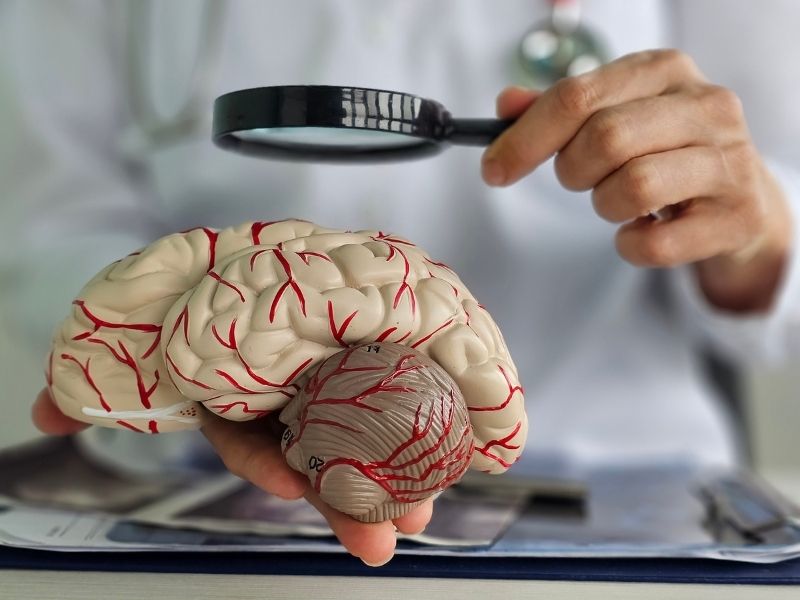
Some tumors cannot be removed; in this case, only a “biopsy” is taken. With a biopsy, a very small part of the brain tumor can be removed for pathological diagnosis, and this helps the doctor choose the treatment method.
Brain Tumor Chemotherapy
Chemotherapy is the destruction of cancer cells with medication. One or more drugs may be administered together. It is generally given orally, intramuscularly, or intravenously. Chemotherapy is usually administered in cycles and repeated every 21-28 days. Whether the patient can receive chemotherapy, and if so, how many cycles will be given, is decided by considering the type of tumor, the patient’s age, and general condition.