
What Is A Pituitary Tumor?
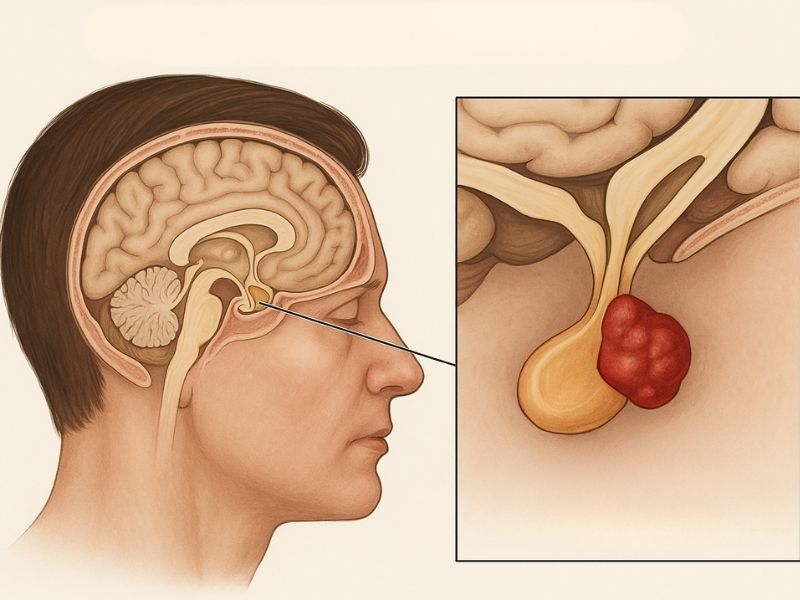
Pituitary tumor usually appears as a benign tumor. Since the onset and progression of the disease are quite slow, making the diagnosis and starting the treatment process may sometimes take time. The pituitary adenoma that develops on the pituitary gland, located just behind the optic nerves, can reach sizes that cover two-thirds of the pituitary gland, which plays an active role in the secretion of certain hormones. Although this condition is not very common in pediatric patients, its incidence is quite high in adults between the ages of 30 and 60. Pituitary tumor is divided into two types: “secreting” and “non-secreting.”
Symptoms Of Pituitary Gland Tumor
In the case of pituitary tumor, no obvious complaints appear in the patient at first. However, as it progresses, some symptoms begin to emerge as the pressure applied to the nerves increases due to the growth of the tumor.
Headache: Most of the headaches felt occur in the back of the head. Since the pituitary gland, which helps hormone secretion, is located in the posterior part of the brain, this pain can sometimes even be felt from the inner parts of the nose. Compared to a standard headache, being felt at the back may be a warning sign for the diagnosis of the disease.
Visual disturbances: Tumors developing on the pituitary gland create internal pressure in the region as they grow. The optic nerves are very close to this area. It is known that with the pressure that develops, the optic nerves are affected and the tumor causes visual disturbances in the patient.
Irregular menstruation: A pituitary gland tumor occurring in female patients causes menstrual irregularity depending on excessive secretion or lack of secretion. Control of menstrual irregularity depends on the treatment of the pituitary gland tumor.
Sexual impotence: The pituitary gland tumor, which causes hormonal disorders in most patients, manifests itself as sexual impotence in male patients accordingly.
Instability in mood: Depending on the location where the tumor appears, patients may suddenly shift from an irritable state to a happy mood. The sharpness of the transition process and the uncertainty of the triggers are the result of the condition that occurs due to the inability of secretions to be properly produced.
Infertility: Pituitary gland tumor, a disease that affects hormones, may cause infertility. This condition, which is sometimes permanent, may resolve after the disease is treated.
Imbalance in breast milk production: Pituitary gland tumor was divided into secreting and non-secreting types, so the amount of breast milk production varies for this reason.
Cushing syndrome as a result of excessive ACTH production: Cushing syndrome, also triggered by the adrenal glands, may lead to fatal consequences together with excessively secreted ACTH hormone. Excessive secretion of this hormone may cause excessive weight gain, the development of fragile bone structure, skin marks, and emotional changes.
Excessive growth: Excessive height increase and gigantism seen in pediatric patients occur because of a tumor in the pituitary gland. The disease, which causes excessive secretion of growth hormone, leads to excessive height growth in children and thickening of the extremities in adults.
Fatigue and impatience: Pituitary gland tumor, which disrupts hormonal balance, may cause effects such as fatigue, irritability, and impatience.
Pituitary Gland Treatment Methods
Pituitary gland treatment is performed using different techniques depending on the stages of the disease. Below, we will mention some methods.
Active Surveillance Method
This method is used in cases located on the pituitary gland but not causing hormonal disorders. In this method, regular tests and examinations are performed on the patient, and the treatment process is started by monitoring the responses of the tumor and its growth rate.
Hormone Replacement Therapy (HRT)
If the pituitary gland tumor prevents the body from producing enough hormones, hormone replacement therapy should be started immediately. In order to eliminate the negative effects of the hormone deficiency observed in the body, some hormones undergo replacement. The necessary hormone supplementation is provided.
Drug Therapy
If the tumor causes the pituitary gland to produce more hormones than necessary, drug therapy will come into play. The small size of the tumor and the excessive secretion of hormones provide an opportunity for the drug therapy method to be tried.
Surgical Intervention
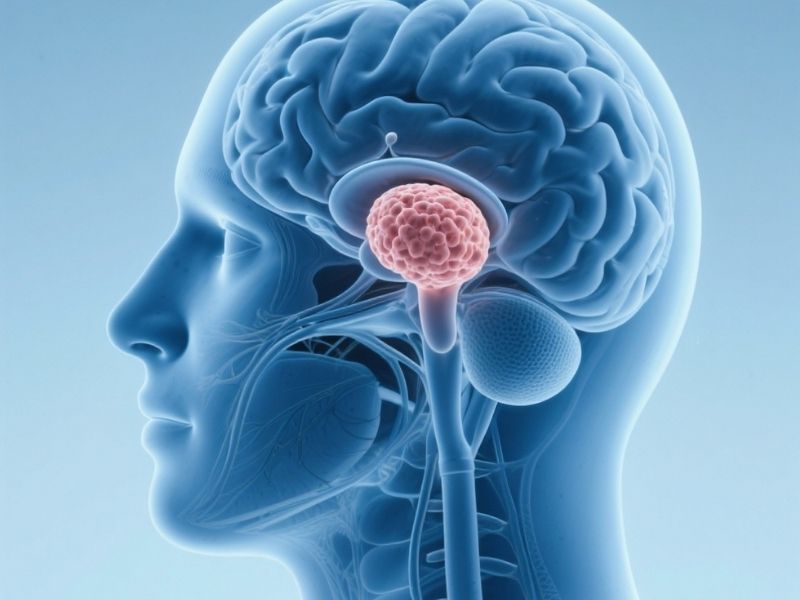
It is the most common among the treatment methods. Depending on the condition of the patient and the hospital, it is the procedure of entering the skull with different methods and removing the tumor and the tissues damaged by the tumor. While almost all of these interventions are performed using the “transsphenoidal route” method, sometimes opening the skull or craniotomy may be required.
Radiation Therapy
This refers to the use of X-rays to destroy the pituitary gland tumor. The treatment process, which may take place in sessions, may not be completed in a single application. With this method, also called external beam therapy, radiation initiated with the help of a machine outside the body may be used to treat the pituitary gland tumor. This method may be started by creating different treatment sessions within a period.
As can be seen, the question of how pituitary tumor treatment is carried out can be diversified according to the effect and formation of the case.