
What Is Brain Metastasis?
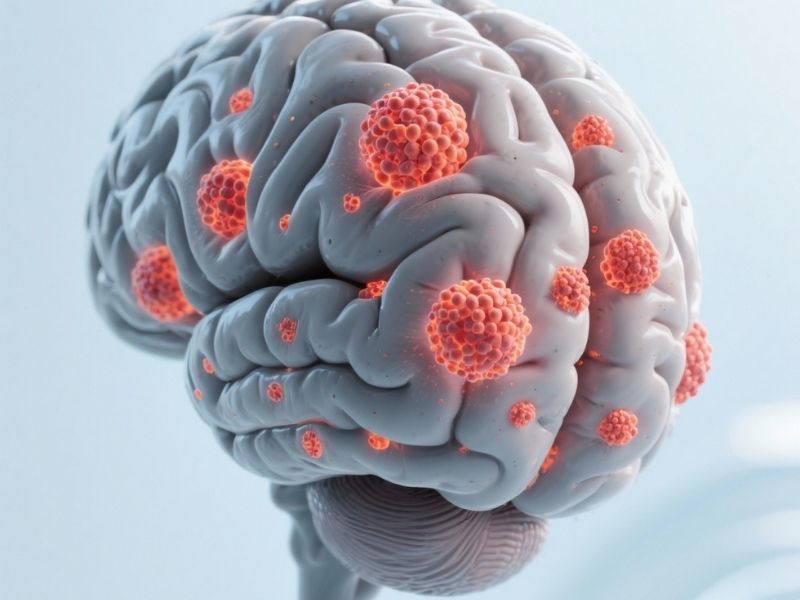
Brain metastasis means that a cancer developing in tissues and organs outside the brain spreads to the brain tissue and forms a tumor there as well. These are the most common tumors seen in the brain.
- What Is Brain Metastasis?
- How Does Brain Metastasis Occur?
- In Whom / In Which Cancers Is Brain Metastasis Most Common?
- How Often And In Whom Is Brain Metastasis Seen?
- What Are The Most Common Signs / Symptoms In Brain Metastases?
- How Is Brain Metastasis Diagnosed?
- How Is Brain Metastasis Treated?
- Is It Possible For Brain Metastases To Recur After Treatment?
How Does Brain Metastasis Occur?
Metastasis means the spread of cancer. Cancer that originates from other parts of the body and spreads to the brain is called a “secondary brain tumor.” These tumors are not the same as a primary brain tumor. Cancer is named according to the organ from which it originates. For example, if lung cancer has spread to the brain, it is called “metastatic lung cancer.”
Cancer cells usually reach the brain through the bloodstream. After reaching the brain, these cells may cause one or more tumors. Cells that break away from a tumor anywhere in the body enter the blood or lymphatic system.
The first place they go from there is the lungs, and afterwards they may also go to other organs.
Because the blood flow of the lungs goes directly to the brain, lung cancer can metastasize to the brain very quickly. Sometimes this metastasis happens so rapidly that a diagnosis of brain metastasis may be made before the diagnosis of lung cancer.
In Whom / In Which Cancers Is Brain Metastasis Most Common?
Although every type of cancer in the body can cause brain metastasis, cancers of the lung, breast, kidney, and colon, as well as melanoma, most commonly metastasize to the brain. Breast and kidney cancers usually cause a single tumor in the brain. Lung and colon cancer and melanoma, on the other hand, cause multiple tumors. Approximately 60% of all brain metastases originate from lung cancer. Approximately 20-30% of all breast cancers also cause brain metastasis.

How Often And In Whom Is Brain Metastasis Seen?
The frequency of cancer increases with age. As more successful results are achieved in cancer treatment and people begin to live longer, metastatic cancers have also become more common. Metastatic cancers are most commonly seen in people over the age of 65. They are generally seen more often in men than in women.
What Are The Most Common Signs / Symptoms In Brain Metastases?
The most common signs and symptoms are headache, weakness, imbalance, and seizures.
In addition to those occurring in the primary cancer in the body, the following signs and symptoms may also be seen in brain metastases.
Increased intracranial pressure: The findings that occur in most patients arise because the growing mass inside the skull increases the pressure inside the skull. Indicators of increased intracranial pressure are headache, vomiting, and disturbances of consciousness.
Headache: The first symptom occurring in approximately half of patients with brain tumor is headache. Most patients experience headache.
Vomiting: Vomiting usually accompanies headache. It is seen more often in children than in adults. In children, this vomiting can be so severe that it is called “projectile” vomiting.
Disturbances of consciousness: Patients with brain tumor experience disturbances of consciousness during a period of their disease. This condition may range from a mild personality disorder to irreversible coma.
Seizure: Epilepsy-like seizures are seen in approximately 35% of brain tumor patients. In this situation, there are convulsions throughout the whole body and loss of consciousness. This condition occurs more frequently in brain tumor patients older than 45 years of age.
Focal neurological findings: Although headache, disturbances of consciousness, and seizures may occur in tumors located in many parts of the brain, some findings vary according to the location of the tumor in the brain. Accordingly, depending on where the tumor is located, findings such as tingling, sensory loss, or decreased strength may occur on the opposite side of the body.
How Is Brain Metastasis Diagnosed?
After a detailed neurological examination, space-occupying lesions in the brain can be identified by Computed Tomography or Magnetic Resonance imaging. During CT and MRI, it may be necessary to administer a drug through the vein so that the tumor can be visualized better. With these examinations, information can be obtained about the tumor’s location, size, number, and probable type. However, the definitive diagnosis can only be made by examining a tissue sample under the microscope. The tumor sample may be taken during surgery or biopsy. If a diagnosis of brain metastasis is made before the primary cancer is found, the necessary tests are performed to find the location of the primary cancer.
How Is Brain Metastasis Treated?
The treatment to be carried out varies according to the type and size of the tumor, how many metastatic tumors are present, where the primary tumor is located, how the person has responded to the treatment of the primary tumor, and the person’s general health condition. The aims of treatment are relief of signs and symptoms, reduction of intracranial pressure, prevention of seizures, more comfortable continuation of daily life, and improvement of quality of life.
Supportive treatment: A number of medications may be used for the relief of headache or pain in general, prevention of seizures, and elimination of tissue swelling (edema) that may have developed due to the tumor. These medications are painkillers, anti-seizure drugs, and steroids.
Chemotherapy: Chemotherapy is not used very often in the treatment of metastatic brain tumors. However, some studies conducted in recent years have shown that some tumors are sensitive to chemotherapy.
Among these tumors are small cell lung cancer, breast cancer, germ cell tumors, and lymphoma. Chemotherapy may also be tried in some tumors that metastasize to the membranes of the brain and spinal cord. When deciding on chemotherapy, the size and number of the tumors, their type, the condition of the primary cancer, which drugs are available in that country, and the responses received from previous chemotherapy are important. In some cases, the drugs used for the primary tumor do not work in brain metastases. The reason for this is unknown. In this case, drugs different from the chemotherapy drugs used in the primary cancer may be used.
Surgical treatment : During surgery, both a tissue sample is taken from the tumor for a definitive diagnosis and the tumor is removed. Surgical treatment is performed if it is thought that it will both improve quality of life and prolong life compared to other treatment methods.
Radiation treatment: This treatment is used in the treatment of a single or multiple metastatic tumors. In addition, it is used to prevent metastases before brain metastases develop in newly diagnosed small cell lung cancer and acute lymphoblastic leukemia.
Is It Possible For Brain Metastases To Recur After Treatment?
After treatment of brain tumor is completed, the patient is followed with MRI or CT every three months for one year. This follow-up is done to determine whether the tumor has recurred. Like other tumors anywhere in the body, metastatic brain tumors may also recur. Treatment of recurrent brain tumors begins with evaluation of the primary tumor. If the primary tumor is under control, repeat surgery, radiosurgery, radiation treatment, or in some cases whole-brain irradiation may be performed for the treatment of the metastatic tumor. Chemotherapy or immunotherapy are also among the options.