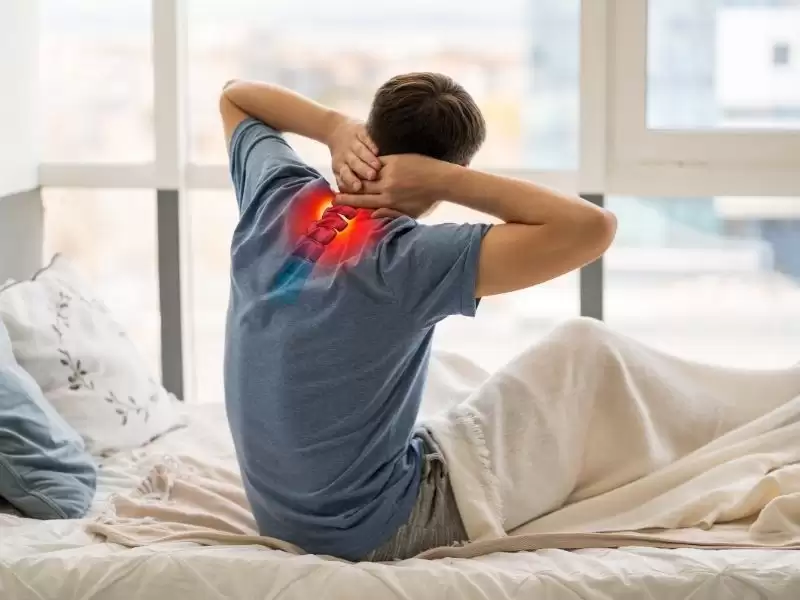
Spondylolisthesis
The spinal alignment, which has a perfect arrangement, may become deformed due to various reasons. Any problem occurring in the spinal structure, which enables a person to stand upright and allows sitting, bending, and getting up, seriously affects daily life. In addition to common spinal problems such as cervical hernia or lumbar hernia, another frequently seen serious problem is spondylolisthesis.
What Is Spondylolisthesis?
The problem of spondylolisthesis is defined as the displacement of the spinal bones, which are normally in a certain sequence and order. This problem, defined in medical literature as lumbar degenerative spondylolisthesis, is often confused with lumbar hernia, and for this reason diagnosis and treatment are delayed. The problem of spondylolisthesis generally may develop;
- In difficult and complicated deliveries
- As a result of congenital defects
- After lumbar region surgeries
- In posture disorders
- As a result of wear and tear in advanced age
- In osteoporosis problems
- As a result of traumatic events such as accidents, falls, and collisions.
The problem of spondylolisthesis causes serious issues in the person’s daily life and reduces quality of life. At the same time, the treatment process should not be postponed. Otherwise, the degree of slippage may increase and nerve damage may occur. In short, the problem of spondylolisthesis, which is defined as the displacement of the vertebrae in the lumbar region, has a number of symptoms. People experiencing these symptoms should definitely consult a doctor.
What Are the Symptoms of Spondylolisthesis?
- Cramping in the legs, especially at night
- A feeling of numbness in the legs
- Difficulty walking and imbalance
- Intense pain in the lower back region
- Loss of strength in the legs
- Increased curvature of the lower back
- Difficulty holding urine and urinary incontinence
- Sexual dysfunction in male patients
As mentioned before, problems of spondylolisthesis are often confused with lumbar hernia problems. For this reason, if these symptoms are experienced, a specialist and experienced doctor should definitely be consulted. Otherwise, both diagnosis and treatment will be delayed.

How Is Spondylolisthesis Diagnosed?
When patients experiencing complaints caused by spondylolisthesis consult a doctor, first the patient’s general health status is evaluated. In addition, a detailed physical examination and then a number of radiological examinations are performed. The radiological examinations performed are imaging methods such as computed tomography, X-ray, and magnetic resonance imaging.
How Is Spondylolisthesis Treated?
In a patient diagnosed with spondylolisthesis, the degree of slippage is also determined. In this process, treatment planning is carried out depending on the patient’s general health condition, the degree of slippage, and the complaints experienced in daily life.
In the treatment of spondylolisthesis, non-surgical treatment methods are first applied. Treatment is carried out with bed rest, painkillers, and physical therapy methods. If the patient’s complaints cannot be relieved during this process and are experienced even more severely, surgical methods may be considered.
In addition to non-surgical treatment methods, the recommendations of experienced specialist doctors should be followed completely in order to ensure that movement control in daily life protects lumbar health.
Spondylolisthesis Surgery
Spondylolisthesis surgery used to be performed under very difficult conditions in the past years and with a number of complication risks. In classical surgery methods, both the long recovery process and the presence of infection and bleeding risks caused a very wearing process for the patient. Today, spondylolisthesis surgeries are performed with microsurgical methods. Thus, a much more comfortable treatment process is experienced for the patient.
In spondylolisthesis surgery performed with microsurgical methods; the risks of infection, nerve and tissue damage, and bleeding remain at a very minimal level. For this reason, the microsurgical method is also frequently preferred today in terms of safety.
After the surgery, it is important for the patient to fully follow the doctor’s recommendations and to protect the lumbar region at the maximum level during the recovery process. At the same time, swimming exercises should be performed at the time and intensity recommended by the doctor after the surgery. Swimming exercises not only help strengthen muscle and bone tissues but also have a relaxing effect on the spinal bones.