
What Should Be Known About Cervical Hernia Surgery?
The problem that occurs as a result of deformation of the discs located between the vertebral bones in the head region is called a cervical hernia. This problem is also defined in medical literature as cervical disc herniation. People experiencing the problem of cervical hernia have a number of complaints that reduce the quality of their daily lives. These complaints can briefly be listed as pain in the neck region and arms, a feeling of numbness starting from the fingertips, dropping objects held in the hand, difficulty walking, and imbalance.
Which treatment method will be applied in a patient diagnosed with cervical hernia is planned depending on the patient’s age, the complaints that occur, and the degree of the hernia. The diagnosis of cervical hernia can be made with the results of different examinations and tests. During the diagnosis stage; after evaluating the patient’s general health status and performing a detailed physical examination, radiological examinations are carried out and nerve tests defined as EMG are applied. In this process, qualified information about the location and degree of the hernia is obtained.
As long as the treatment of the cervical hernia problem is delayed, it will progress further and reduce the quality of life even more over time. For this reason, risk factors should first be known and the necessary precautions should be taken before hernia formation occurs.
What Causes a Cervical Hernia?
There are a number of risk factors for the problem of cervical hernia. These can be listed as follows;
- Sitting in front of the computer for a long time
- Poor posture
- Fatigue and stress
- Moving uncontrollably
- Traumatic events such as traffic accidents, falls, and collisions
- Incorrect massage applications
- Working in jobs that require constant sitting
- Household chores such as hanging curtains and cleaning windows
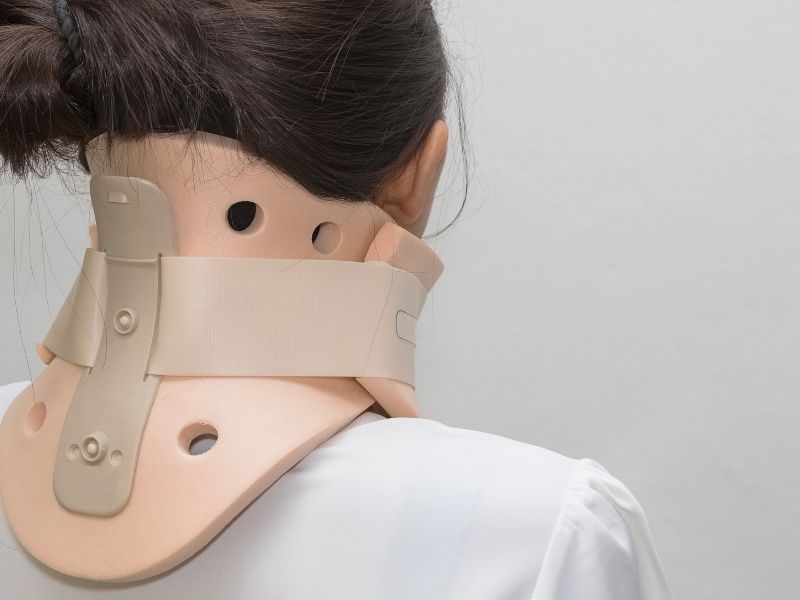
In order to prevent the occurrence of cervical hernia, it is recommended to correct posture disorders, for people working in jobs that require constant sitting to move frequently, to perform controlled exercises, and to eat a balanced diet in order to strengthen muscle / bone tissues. Otherwise, hernia formation and progression are inevitable. In fact, among the different treatment methods available for cervical hernia, the permanent treatment methods are surgical methods. Which treatment method will be applied may vary depending on the degree of the hernia.
Cervical Hernia Treatment
If the degree of the hernia has not yet progressed, changes that the patient will make in their lifestyle may be enough to eliminate the complaints. In addition, painkillers and physical therapy and rehabilitation applications may also be carried out. However, if the patient feels intense pain in both the front and back of the neck and weakness has occurred along with numbness in the arms, treatment with surgical methods may be required.
Cervical Hernia Surgery
Cervical hernia surgery is based on the discipline of eliminating the pressure on the spinal cord and the nerves in the region. In surgeries performed with classical methods, a large incision is made and the risk of tissue / nerve damage is high. For this reason, surgical treatments applied with microsurgical methods by taking advantage of today’s technical possibilities are much more preferred.
In surgeries performed with microsurgical methods, an incision of approximately 1.5 centimeters is made and the pressure applied to the nerves is eliminated by entering the disc region. After this highly comfortable operation, most patients are helped to stand up 1 day after the surgery. With microsurgery, which has a short recovery period, the patient is started on exercise programs approximately 2 weeks after cervical hernia surgery.
Cervical hernia surgery with microsurgery is highly advantageous compared to the classical surgery method. The risk of infection and bleeding is low and the recovery period is short. At the same time, the patient’s pain control can be managed with medications and exercise programs.
What Should Be Known About Cervical Hernia Surgery
Whether cervical hernia surgery is performed with classical methods or with microsurgical methods, there are certain points that the patient should pay attention to after the operation. The most important issues that patients who have undergone cervical hernia surgery wonder about are the answers to questions such as “how should I lie down after the surgery” and “how should exercise be after the surgery.” The points that the patient should pay attention to during the recovery period after cervical hernia surgery are as follows;
- In the early stage after the surgery, the patient should continue bed rest for a minimum number of days.
- How movements such as getting out of bed and lying down should be performed should depend on the doctor’s recommendation.
- Care should be taken to choose an orthopedic bed and pillow.
- From the second week after the surgery onward, sitting is possible. Hard surfaces should be chosen, and low or soft surfaces should not be used for sitting.
- A western-style toilet should be preferred.
- It is possible to take a shower after the surgery.
- Harmful substances such as alcohol, drugs, or cigarettes should not be used.
- Ideal body weight should be maintained. The walking distance can be gradually increased 1 week after the surgery.
- Sexual activity should not take place during the first 1 week after the surgery.
- The use of medications recommended by the doctor should not be neglected.
How Is Neck Health Protected?
Neck health is of great importance in ensuring a person’s daily life comfort. For this reason, posture disorders should especially be corrected and the choice of bed and pillow should be made in accordance with the physiological structure.
During computer use, the distance and height of the screen are major factors in protecting neck health. Remaining motionless for a long time in the wrong position is highly dangerous for spinal health. For this reason, it is recommended not to neglect routine exercise programs.