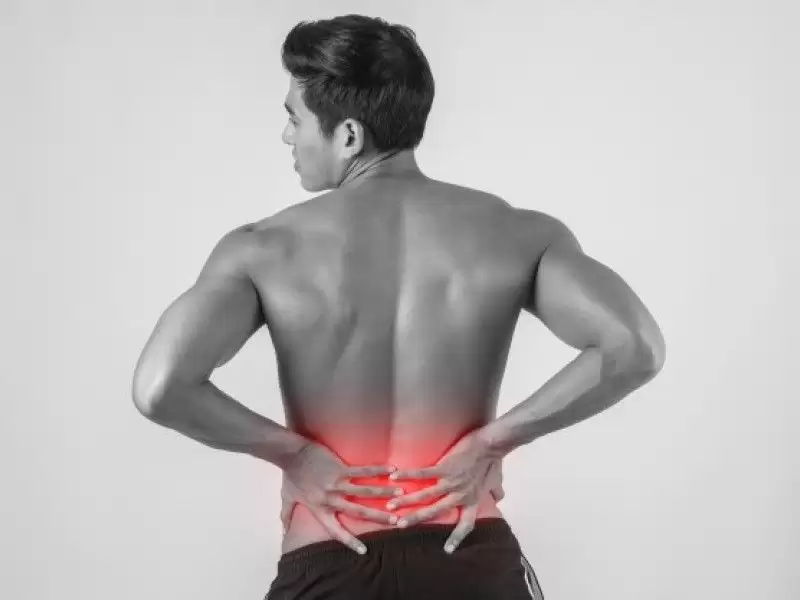
Incorrect practices based on hearsay to get rid of lumbar hernia and relieve pain may cause permanent damage. One of the most common conditions in society, lumbar hernia is defined as a disease that traps a person in daily life with unbearable pain and limitation of mobility. Neurosurgery Specialist Op. Dr. Umut Yaka stated that incorrect practices based on hearsay to get rid of lumbar hernia pain may cause serious health problems, and explained the common misconceptions about lumbar hernia.
Do Not Apply These Treatment Methods!
“Unfortunately, a large number of people do not have sufficient awareness about their illnesses. While writhing in pain, instead of going to a doctor, they resort to a number of methods that have no scientific basis whatsoever,” said Yaka:
“We encounter patients who have honey, figs, or fish tied to their lower back, those who dangerously cut or burn their skin, apply leeches, undergo unskilled pulling, and even patients who have thread passed through their lower back with a needle just to relieve the pain. According to a common belief among the public, a patient with lower back pain thinks they have a lumbar hernia. However, lumbar hernia is not a single type, and different treatment methods need to be applied at different stages of the disease. Lower back and leg pain may be due to lumbar hernia, but it may also be caused by spondylolisthesis, spinal tumor, spinal fractures, rheumatic diseases, inflammatory conditions, or various diseases involving the musculoskeletal system. As a result, while recovery may be possible with a simple treatment, we frequently encounter patients who end up needing surgery because of unconscious practices. The misconceptions about lumbar hernia can be listed as follows:
"Lying on Your Back on a Hard Surface Reduces Pain"
Wrong!
Patients usually feel more comfortable when they lie on their side and pull their legs toward their abdomen. Because in this position, the space between the vertebrae widens and the pressure on the leg nerves decreases.

“Except for Meals and Toilet Needs, One Should Stay in Bed for a Full Week Without Getting Up”
Wrong!
Two days of bed rest is sufficient. Staying in bed for a long time may lead to depression in the patient.
“To Reduce Pain, We Should Avoid Walking and Going Up and Down Stairs, and Prefer Sitting More”
Wrong!
Sitting increases the load on the lower back; one should not sit continuously for more than twenty minutes.
“Wearing a Corset Supports the Lower Back Muscles and Reduces the Load on the Lower Back”
Wrong!
Except in cases of spinal fractures and slippage, wearing a corset continuously is harmful; it causes weakening of the lower back muscles.
“We Can Get Rid of Lumbar Hernia by Pulling the Lower Back”
Wrong!
Lower back pulling is only beneficial in slippages of the joints formed between the posterior extensions of the vertebrae. When performed on people with advanced lumbar hernia, it may cause the hernia to rupture and lead to permanent nerve damage.
“Lumbar Hernia Can Be Treated with Alternative Methods Such as Tying Fish to the Lower Back or Cupping”
Wrong!
Such alternative methods only increase blood circulation in the lower back and cause relaxation in the muscles, resulting in temporary relief for the patient. However, they have no effect on the hernia itself.
“Lumbar Hernia Surgery Is Very Risky, and Most Patients Either Become Disabled or Their Pain Never Fully Goes Away”
Wrong!
In lumbar hernia surgeries performed with the microsurgical method, there is no such risk as becoming disabled or paralyzed.
“After Lumbar Hernia Surgery, the Patient Cannot Drive for at Least Three Months and Must Not Travel”
Wrong!
After lumbar hernia surgery, the patient may travel long distances by plane or train the day after the operation, and by car or bus two days after the operation. Two weeks after the operation, they may drive if they are not in a place with heavy traffic.
“After Lumbar Hernia Surgery, Sexual Power Decreases, and at Least 3 Months of Sexual Abstinence Is Required”
Wrong!
Lumbar hernia reduces sexual power, but the period of sexual abstinence after surgery is only 10 days.
“After Surgery, Sports Activities Such as Football, Skiing, Swimming, and Tennis Can Never Be Done Again”
Wrong!
Walking and swimming three weeks after surgery help the patient return to normal life more quickly. Jumping sports are prohibited for two months because they delay recovery; afterward, they are allowed provided that the person warms up properly before exercise.